Trump's Rally Tour Clashes with Candidates Keeping Their Distance
With approval ratings low and fraud claims persisting, the President's active campaign has created a complex dynamic for congressional candidates on Election Day.
By Nikhil Petrov ·
President Donald Trump has maintained an intense schedule across the country in the final days of this midterm election, holding dozens of rallies to energize the Republican base. His most recent event took place on Sunday in Salina, Kansas, where he addressed a crowd of supporters with a direct appeal. The President told voters to treat the upcoming vote as if he were personally on the ballot, a strategy designed to transfer his high name recognition to down ballot candidates. This approach contrasts with the typical presidential role in midterm cycles, where the leader of the majority party often stays in the background to allow candidates to define their own races.
Despite the President's vocal support, many Republican congressional candidates have chosen to keep a professional distance from Trump during the final week of campaigning. This tactical separation reflects a broader concern within the party that the President's polarizing presence could be a liability in closely contested districts. Candidates in battleground states have focused on local issues and their individual records, hoping to attract independent voters who may be hesitant to associate themselves too closely with the White House. This dynamic creates a visible tension between the national brand of the presidency and the local realities of district politics.
The national mood appears to be a significant factor in this strategy, as recent polling indicates that a majority of Americans view the country as heading in the wrong direction. According to an AP NORC poll, only 35 percent of U.S. adults approve of Trump's job performance, while just 25 percent approve of his handling of the economy. About seven in ten voters said the nation is off track, with most blaming the President for high prices. These numbers suggest that while Trump retains a strong base, his approval ratings may not be sufficient to carry every candidate in a competitive environment where economic concerns are paramount.
The President has also continued to make claims regarding voting integrity, asserting that noncitizens vote in large numbers despite a lack of widespread evidence. His administration has pursued legal actions in states like Alaska and California, and the Justice Department has threatened to prosecute local election officials. These moves have raised fears among Democrats of potential interference and intimidation, adding another layer of complexity to the election administration process. A federal judge temporarily barred the administration from implementing a plan to prevent noncitizen voting, a decision critics say helps protect eligible voters from disenfranchisement.
Financial resources have also played a distinct role in shaping the campaign landscape, with the 2026 elections likely becoming the most expensive in history. Republican committees outraised and outspent their Democratic counterparts, aided significantly by Trump affiliated groups and private donors like Elon Musk. However, at the candidate level, Democrats managed to outraise their opponents, suggesting a different flow of money at the local level. An analysis of television ad spending showed that 88.1 percent of Republican general election ad dollars went to states and districts that Trump won in the previous cycle, with over 850 million dollars spent in areas where he won by at least ten points.
In the Senate, the focus has shifted to specific battlegrounds where the President's influence is felt most acutely. Kansas, traditionally a Republican stronghold, has become central to the fight for control of the chamber, with Trump holding a rally there to support the party's candidates. In other states like Maine and Michigan, the races are rated as toss ups, and the economic strain caused by tariffs has made these states more competitive than they were in previous cycles. The AP noted that in Maine, the incumbent Senator Susan Collins faces a challenging environment as voters weigh their economic concerns against their party loyalties.
Democratic leaders have framed the election as a referendum on the President's second term, emphasizing the anger of voters over high prices and the unpopular war with Iran. House Democratic Leader Hakeem Jeffries has outlined a 100 day agenda focused on the cost of living and oversight, which he would prioritize if his party gains control of the chamber. The stakes are high, as a win in even one chamber would likely lead to investigations and possible impeachment proceedings, setting the tone for the final two years of the current administration and the upcoming presidential cycle.
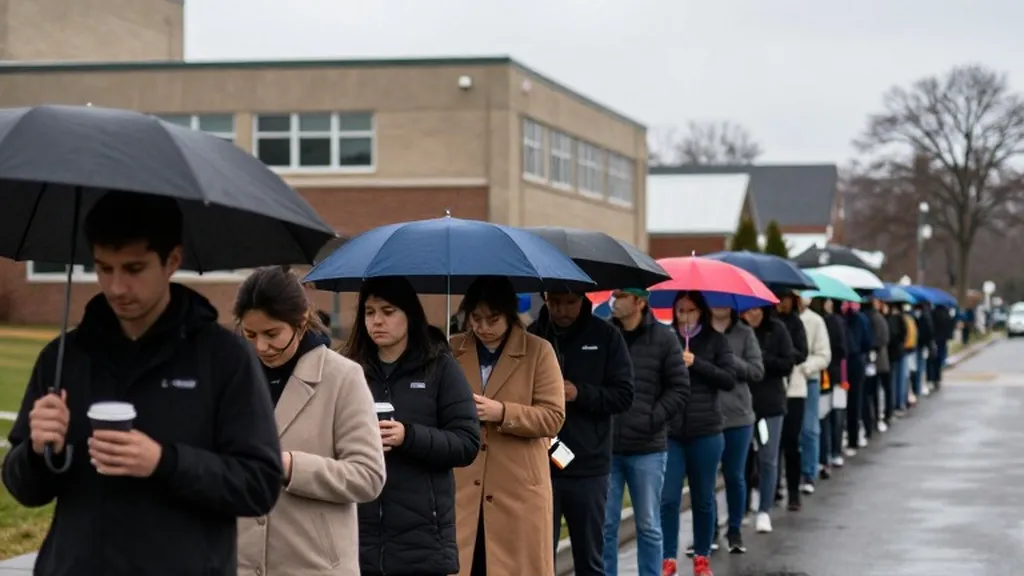
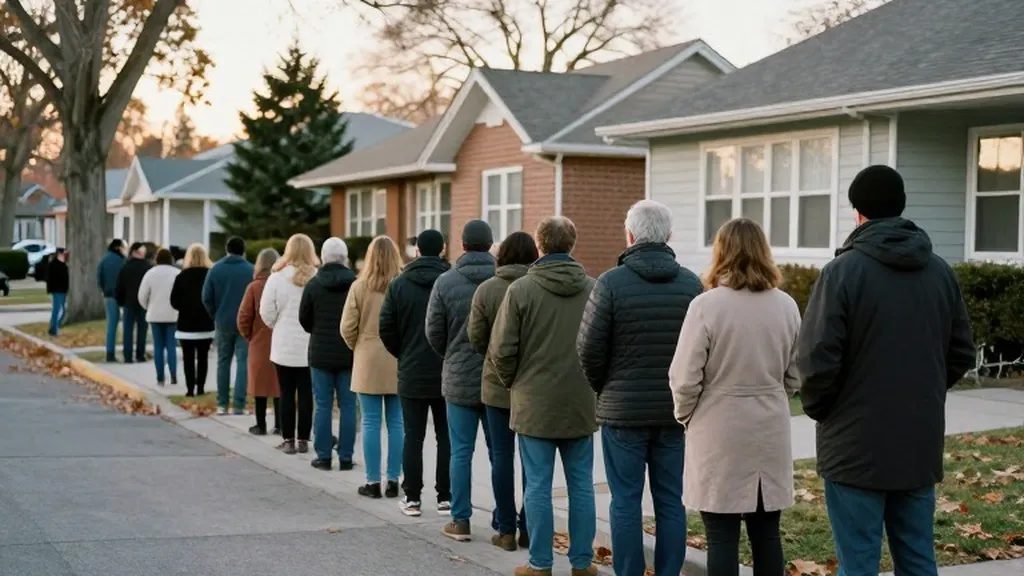
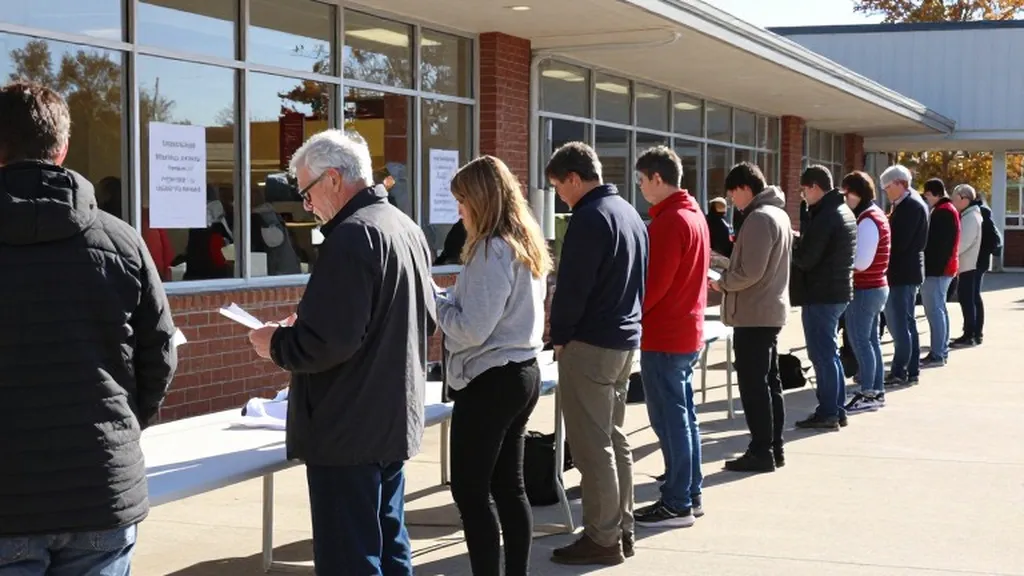
Voters across the country are heading to the polls with a wide range of perspectives, as illustrated by comments from individuals in different parts of the nation. Mark Barker of Palm Beach Gardens, Florida, expressed his support for the President, stating that he has been following Trump and believes he is doing an awesome job. In contrast, James Moore, a librarian in Raleigh, North Carolina, highlighted his personal financial struggles, noting that he is paying more for taxes, healthcare, and everything else. These individual stories reflect the broader national debate over whether the current administration has delivered on its promises to improve the standard of living.
The election also has implications for the future of both parties, with a strong Democratic night potentially boosting the profiles of 2028 candidates like Gavin Newsom, JB Pritzker, and Pete Buttigieg. Conversely, a Republican hold on the Senate could complicate the path for Vice President JD Vance, who is often discussed as a future presidential contender. The results will also determine who controls Congress for the final two years of Trump's term, influencing the legislative agenda and the balance of power in Washington. As polls open across the country, the outcome remains undecided, with both parties bracing for a close contest that could hinge on turnout in key districts.