House and Senate control: What changes if Democrats win one chamber
A Democratic victory in either chamber would trigger oversight actions and test the 100-day agenda of House Leader Hakeem Jeffries while complicating the path for 2028 candidates.
By Sanjay Ivanov ·

Election Day arrives with the fate of Congress hanging in the balance, as voters decide who will hold the levers of power during the final two years of President Donald Trump's second term. The Associated Press describes the contest as a referendum on the current administration, noting that voters are struggling with high prices and expressing anger over an unpopular war with Iran. According to Ballotpedia, Democrats need a net gain of three House districts and four Senate seats to secure majorities in both chambers, while Republicans can afford to lose only two seats in each house to retain control. The stakes extend beyond simple party labels, as a shift in power would immediately alter the legislative and oversight landscape in Washington.
If Democrats capture the House, House Democratic Leader Hakeem Jeffries would become the first Black speaker of the chamber. He has outlined a 100-day agenda focused on the cost of living and oversight of the executive branch. This agenda signals a move toward immediate investigations and potential impeachment proceedings, which the Associated Press notes become likely if Democrats win even one chamber. The shift in the House would also put pressure on the administration's legislative priorities, forcing the White House to negotiate with a body that may be less inclined to support the president's domestic and foreign policy initiatives without concessions.
Control of the Senate would determine the confirmation of nominees and the ability to pass legislation that requires a 60-vote threshold to overcome procedural hurdles. Republicans currently hold a 53 to 45 advantage, counting two independents who caucus with Democrats. A net gain of four seats by Democrats would strip Republicans of this supermajority, making it significantly harder to confirm judicial and executive nominees. This dynamic would likely lead to more contentious confirmation fights, as Democrats would hold the power to block or delay key appointments that shape the federal government for decades.
The outcome of these midterms will also have profound implications for the 2028 presidential race. A strong Democratic night would boost the prospects of potential candidates such as Gavin Newsom, JB Pritzker, and Pete Buttigieg, providing them with a stronger platform to launch their bids. Conversely, a Republican hold could complicate the path for Vice President JD Vance, who would face a more challenging environment for his own future ambitions. The Associated Press notes that one or two seats could tip either chamber, making the final tally a critical determinant of the political trajectory for the next two election cycles.
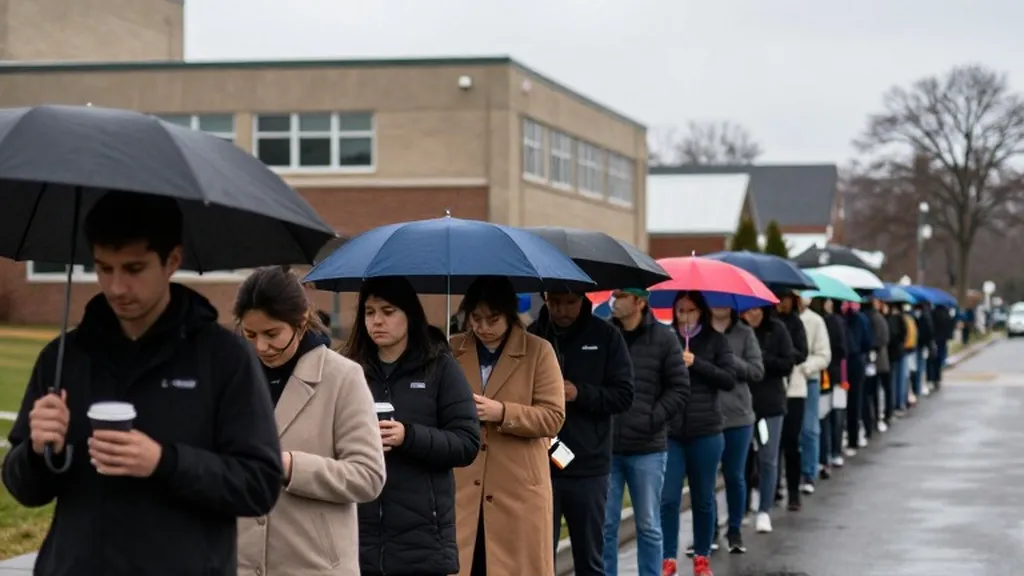
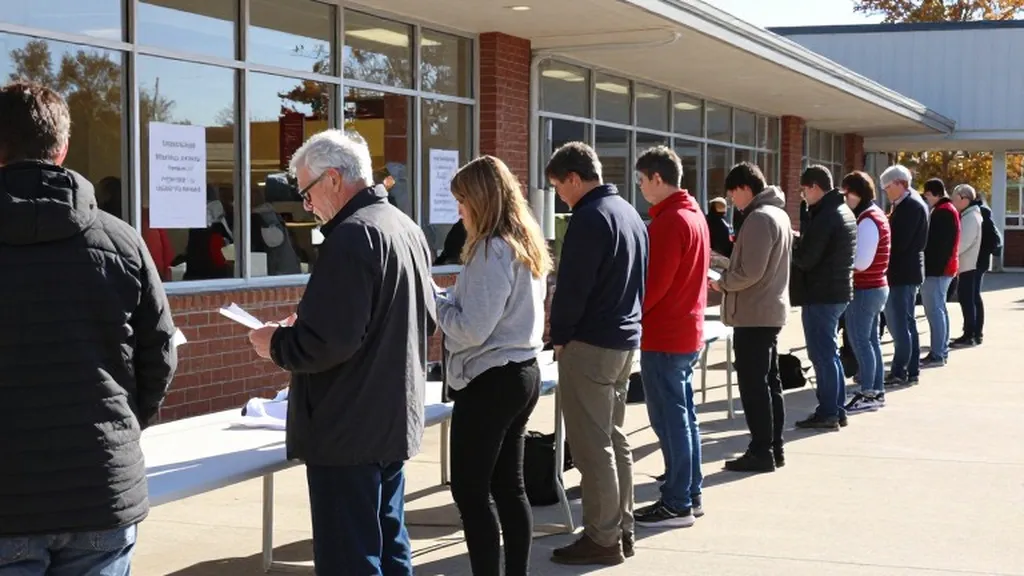
Voters are heading to the polls with a mix of optimism and anxiety, as reported by the Associated Press. More than 57 million people had already voted as of Monday, surpassing early vote totals from four years ago in many closely watched states. In Palm Beach Gardens, Florida, voter Mark Barker said he has been following Trump the whole time and thinks he is doing an awesome job. In contrast, James Moore, a librarian in Raleigh, North Carolina, noted that he is paying more taxes and more for healthcare, reflecting the economic concerns driving many voters. These personal narratives underscore the broad national mood that the Associated Press characterizes as a struggle with high prices and dissatisfaction with the direction of the country.
Republican leadership is bracing for potential losses in the House while fighting to hold the Senate. RNC Chairman Joe Gruters emphasized that everything depends on turnout, stating that if they turn out their voters, they win. Democratic leadership, represented by DCCC Chair Rep. Suzan DelBene, argued that the American people are angry and want change. The Associated Press reports that Democrats are cautiously optimistic, while Republicans are focused on defending their Senate majority. This divergence in strategy highlights the different risks each party faces as they approach the final hours of voting.
The election is also marked by significant administrative challenges and legal disputes. A federal judge temporarily barred the Trump administration from carrying out a plan to prevent noncitizen voting, a move that critics say risks disenfranchising eligible voters. In California, a judge ordered the administration to stop demanding that election officials segregate ballots cast by people on lists of suspected noncitizens. The U.S. Postal Service added hours and staff to ensure mail ballots are counted on time, addressing concerns about the timely processing of votes. These legal and logistical hurdles add a layer of complexity to an already high-stakes election.
Financially, the 2026 elections are likely to be the most expensive in history. According to an Associated Press analysis of AdImpact data, 88.1 percent of Republican general election TV ad spending went to states and districts Trump won in 2024. Republican committees outraised and outspent Democratic committees, aided by Trump-affiliated groups and Elon Musk, while Democrats outraised their opponents at the candidate level. This spending disparity reflects the intensity of the competition and the belief that significant resources are necessary to influence the outcome in key battlegrounds.
The Associated Press notes that Republicans tried to beat the midterm pattern, which historically sees a president's party lose seats, through redistricting. However, new districts in Florida and other states may not vote as drawn, adding uncertainty to the final results. In the Senate, key matchups in states like North Carolina, Georgia, and Ohio will determine the balance of power. In North Carolina, former Governor Roy Cooper faces former RNC chair Michael Whatley, while in Georgia, Senator Jon Ossoff battles Representative Mike Collins. These races are pivotal, as a single seat can shift the entire chamber's control.