Midterm math: Both parties fight to break the historical losing pattern
With the House and Senate in play, Democrats and Republicans deploy distinct strategies to overcome the midterm historical trend that typically punishes the president's party.
By Daniel Bernard ·
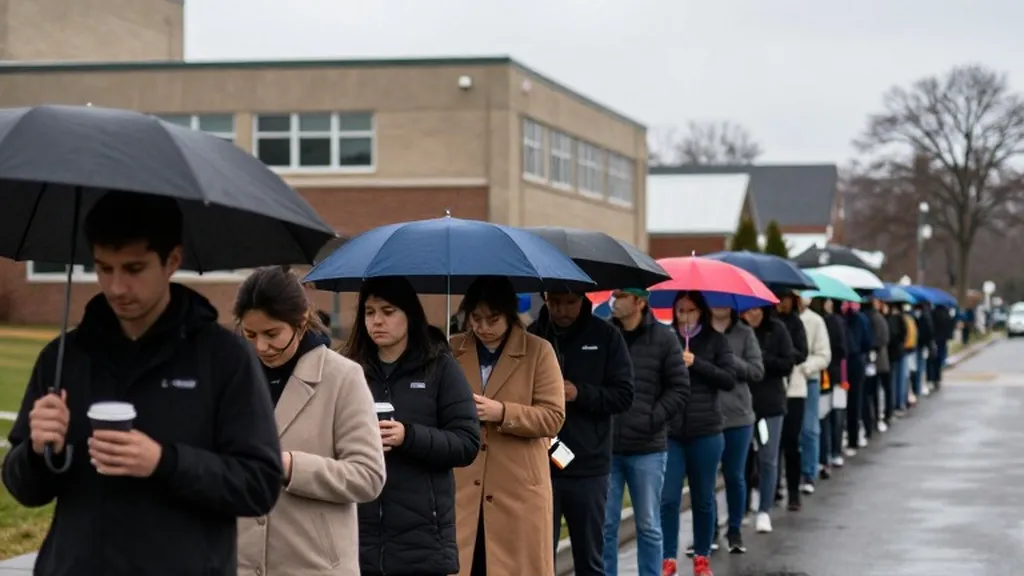
Election Day has arrived for a decisive midterm contest that determines which party controls Congress for the final two years of President Donald Trump's second term. The Associated Press describes the day as a referendum on the administration, noting that many voters are grappling with high prices and frustration over an unpopular war with Iran. The historical weight of this cycle is significant, as the president's party almost always loses seats in midterm elections. Both political parties entered this election with specific tactical plans to defy that long-standing pattern, resulting in a highly contested race for control of the legislative branches.
In the House of Representatives, all 435 seats are up for grabs. Republicans currently hold 218 seats while Democrats hold 214, with one independent and several vacancies. The math for a majority is tight, requiring Democrats to gain a net of three districts while Republicans can afford to lose no more than two. Ballotpedia identifies 46 battleground districts, including 25 held by Democrats and 21 held by Republicans. A significant portion of these seats are in districts that voted for the opposing party in the 2024 presidential election, creating a complex landscape where local dynamics may diverge from national trends. Six states are using new congressional maps following mid-decade redistricting, a move Republicans hoped would help them retain seats despite the historical headwind.
The Senate race involves 35 seats, with Democrats needing a net gain of four seats to claim a majority. Republicans, who hold 53 seats, can lose only two to maintain control. The Associated Press notes that one or two seats could tip the balance in either chamber. Key battlegrounds include states like Maine, Iowa, and Kansas, which are rated as toss-ups or leaning slightly toward one party. In Maine, Senator Susan Collins is facing a competitive challenge from Democrat Troy Jackson, with the Associated Press citing economic strain and tariffs as factors making the state more competitive. In Kansas, a traditionally reliable Republican state, the race has become central to the fight for Senate control, with the incumbent Roger Marshall facing a determined challenge.
Governor races are also critical, with 36 governorships on the ballot. Republicans currently hold 26 of these offices, and Democrats hold 24. Democrats are hoping to achieve a nationwide majority of governorships for the first time in two decades, which would require a net gain of two seats. The Associated Press highlights competitive races in states such as Texas, Florida, and Iowa. In Georgia, former Governor Roy Cooper is not running for the Senate but the state remains a key battleground for the governor's mansion, where Republican Rick Jackson faces Democrat Keisha Lance Bottoms. In Ohio, Vivek Ramaswamy is running for governor, with the race complicated by campaign ads and local issues. The outcome of these races will influence the political landscape in states that did not use new congressional maps.
Voter sentiment is a major factor in how both parties are approaching the day. AP-NORC polling indicates that 35 percent of U.S. adults approve of Trump's job performance, while 25 percent approve of his handling of the economy. About seven in ten adults say the country is heading in the wrong direction, with most blaming the president for high prices. This mood has led Democrats to be cautiously optimistic, with DCCC Chair Rep. Suzan DelBene stating that the American people are angry and want change. Conversely, Republicans are bracing for potential losses in the House while fighting to hold the Senate. RNC Chairman Joe Gruters emphasized that everything depends on turnout, asserting that if they can mobilize their voters, they will win despite the historical trend.
Money has played a significant role in shaping the campaign, with the 2026 elections likely becoming the most expensive in history. Republican committees outraised and outspent Democratic committees, aided by Trump-affiliated groups and support from Elon Musk. However, at the candidate level, Democrats managed to outraise their opponents. An analysis by the Associated Press of AdImpact data shows that 88.1 percent of Republican general election TV ad spending went to states and districts that Trump won in 2024. This strategy reflects an effort to consolidate support in areas where the president has strong backing, while Democrats focused on competitive districts where they could potentially flip seats. The financial resources deployed by both sides underscore the high stakes of this midterm election.
Voter behavior has already shown signs of high engagement, with more than 57 million people having voted as of Monday. This early vote total surpasses the four years ago in many closely watched states, suggesting a high level of participation that could influence the final outcome. The U.S. Postal Service added hours, staff, and special lines to ensure that mail ballots are counted on time, a logistical effort that underscores the importance of every vote. In states like California and Florida, which largely use mail voting or have large early voting populations, the final results may take longer to emerge. The high volume of early voting is seen by both parties as a positive sign for turnout, which is critical for overcoming the midterm disadvantage.
President Trump has been actively involved in the campaign, holding dozens of rallies across the country. His schedule included stops in Mississippi, South Carolina, and Texas, with his final rally before the election taking place in Salina, Kansas. At that event, he urged voters to pretend he was on the ballot, a strategy aimed at energizing the base. However, many Republican candidates kept their distance from the president, a tactic that has been common in midterm cycles where the president's approval ratings are not universally high. Trump has also made claims about voting fraud, including that noncitizens vote in large numbers, which has led to legal challenges and administrative actions by his administration. These moves have raised concerns among Democrats about potential interference and intimidation, particularly as the Justice Department threatens to prosecute local election officials.