Wall Street Watches Midterm Stakes in AI, Debt, and Trade
Investors brace for congressional outcomes that could reshape fiscal policy and global trade alliances.
By Daniel Bernard ·

Wall Street is turning its attention to the November 3 midterms, viewing the election as a critical checkpoint for macroeconomic stability. According to Reuters, market participants are monitoring the results for signals on artificial intelligence spending, debt ceiling negotiations, and the future of trade alliances. The outcome of these races will determine which party controls the House and Senate for the final two years of President Donald Trump's second term, a period that analysts believe will define the trajectory of U.S. fiscal policy.
The economic backdrop is tense. The Associated Press reports that voters are struggling with high prices and expressing anger over an unpopular war with Iran. In AP-NORC polling conducted recently, only 35% of U.S. adults approve of Trump's job performance, while just 25% approve of his handling of the economy. Approximately 7 in 10 adults say the country is heading in the wrong direction. These sentiments have created a volatile environment for markets that are already sensitive to shifts in government spending and tax policy.
Control of the House is a primary focus for investors. All 435 seats are up for grabs, with Republicans holding 218 and Democrats holding 214, plus one independent. Democrats need a net gain of three districts to secure a majority, while Republicans can afford to lose no more than two seats. Ballotpedia identifies 46 battleground districts, a number that suggests a highly contested race. The composition of the new House will directly influence the legislative agenda, including oversight investigations and potential impeachment proceedings if Democrats win a chamber, according to the Associated Press.
The Senate race is equally significant for long-term fiscal planning. Thirty-five seats are up for election, including 33 regular contests and two special elections for the terms held by Marco Rubio and JD Vance. Republicans currently hold 53 seats, while Democrats hold 45, with two independents who caucus with Democrats. Democrats require a net gain of four seats to take control of the Senate. A divided government could lead to gridlock on major spending bills, while a unified Democratic government might push for different priorities on debt and trade.
Artificial intelligence spending is a key concern for tech-focused investors. The Associated Press notes that the 2026 elections are likely to be the most expensive in history, with Republican committees outraising and outspending Democratic committees at the committee level. This spending surge is partly driven by Trump-affiliated groups and Elon Musk. However, at the candidate level, Democrats have outraised their opponents. The intensity of this financial competition reflects the high stakes involved in securing legislative allies who support or oppose massive infrastructure and tech investments.
Trade policy remains a central issue, particularly regarding tariffs and alliances. The Associated Press highlights that economic strain and tariffs have made states like Maine competitive in the Senate race. In Maine, Senator Susan Collins faces Democratic challenger Troy Jackson. The outcome in Maine, along with other swing states, could signal the direction of trade policy under the next Congress. Investors are watching these races to gauge whether the administration will maintain its current tariff strategies or seek compromise with a potentially more powerful legislative opposition.
The debt ceiling is another major point of scrutiny. With Republicans bracing to lose the House and fighting to hold the Senate, the balance of power will determine how negotiations on the nation's borrowing limit proceed. The Associated Press reports that one or two seats could tip either chamber, making the margin of victory in key districts crucial. If Democrats gain control of either chamber, they may push for stricter conditions on debt increases, potentially affecting interest rates and market volatility. This uncertainty has led many analysts to advise caution in portfolio allocation.
Governor races also play a role in the broader economic picture. Thirty-six governorships are on the ballot, with Democrats defending five seats in states Trump won in 2024 and Republicans defending two in states Harris won. The Associated Press notes that Democrats are hoping to hold a majority of governorships for the first time in two decades. A shift in governorships could impact state-level economic policies, including infrastructure spending and energy regulations, which are closely watched by sector-specific investors.
Voter turnout is expected to be high, with more than 57 million people having already voted as of Monday, surpassing early vote totals from four years ago in many states. The Associated Press describes the election as a referendum on Trump's second term, with voters making decisions based on their economic experiences. RNC Chairman Joe Gruters emphasized the importance of turnout, stating that if Republicans turn out their voters, they will win. Conversely, DCCC Chair Rep. Suzan DelBene said the American people are angry and want change, suggesting a potential shift in policy direction that could impact markets.
The administrative aspects of the election are also under the microscope. A federal judge temporarily barred the Trump administration from carrying out a plan to prevent noncitizen voting, a move that critics say risks disenfranchising eligible voters. The U.S. Postal Service has added hours and staff to ensure mail ballots are counted on time. These logistical details, while seemingly minor, can impact the speed and reliability of results, which is a factor for day traders and short-term investors. The Justice Department's threats to prosecute local election officials have added a layer of complexity to the process.
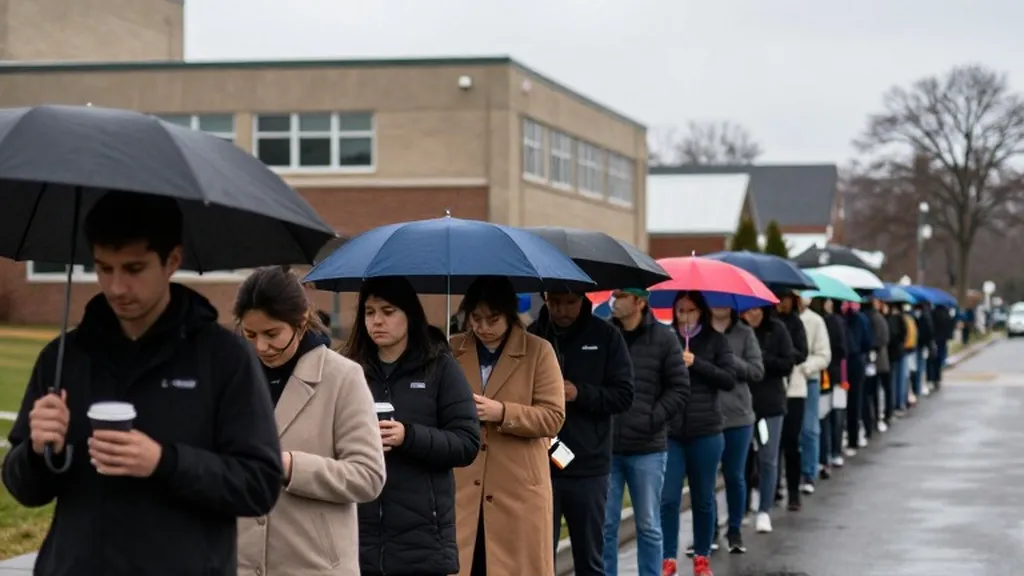
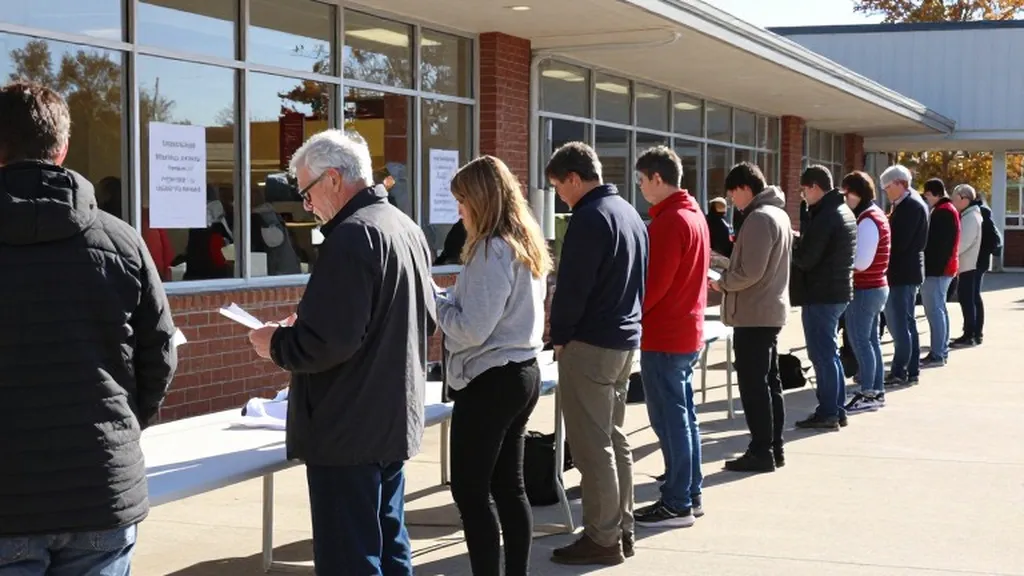
As polls open across the country, the market is poised for a reaction to the emerging trends. The Associated Press notes that many Republican candidates have kept their distance from Trump, who held dozens of rallies, including one in Salina, Kansas, where he urged voters to pretend he was on the ballot. This dynamic suggests a complex landscape where local issues and national narratives are intertwined. Investors will be watching the early returns from key states like Michigan, Georgia, and Ohio to assess the broader implications for the U.S. economy.