Utah's Forgotten Venues: From Dance Halls to Relocation Camps
Six sites across the state, including a condemned paper mill and a WWII camp, are now landmarks of memory rather than active communities.
By Daniel Bernard ·
Utah’s cultural history is often defined by pioneering narratives and geological features, yet a network of former gathering places has faded from public view. These sites, ranging from industrial complexes to entertainment venues, have undergone multiple transformations or complete erasure. Their current status varies from active preservation projects to total disappearance, leaving behind physical remnants that anchor local memory.
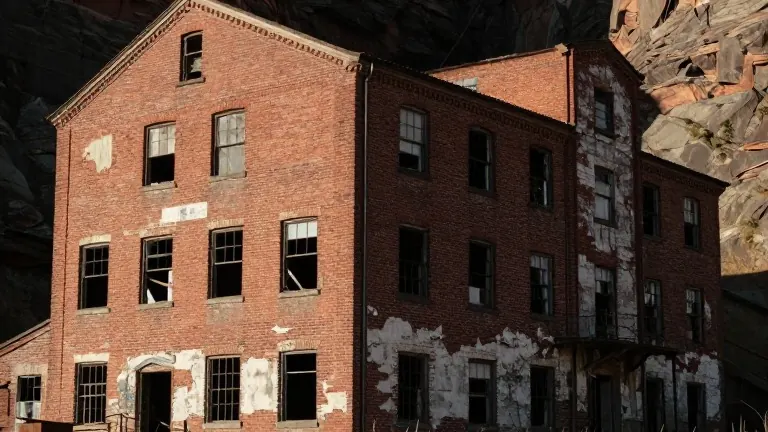
The Cottonwood Paper Mill near the mouth of Big Cottonwood Canyon illustrates this cycle of change. Constructed in the 1880s to produce paper for the Deseret News, the facility generated up to five tons of paper daily. A fire in 1893 destroyed half the structure after the mill changed owners in 1892. The building sat vacant until the 1920s, when it reopened as the Old Mill Club dance hall. It subsequently functioned as a rock venue, a haunted house, and a craft boutique before becoming abandoned in the 1980s. Earthquake damage led to its condemnation in 2005. Current owners seek demolition for safety reasons, while Preservation Utah notes public support for keeping the structure.
In Salt Lake City, the building at Beck Street has served as a water-based gathering spot for generations. Shoshone and Ute people used the natural warm springs long before the site became the Wasatch Warm Springs Plunge, a public bathhouse with two pools that operated until the 1970s. The Mission-style building later housed the Children's Museum of Utah until that institution relocated to The Gateway in the early 2000s. After years of vacancy, the city completed an $8 million repair and stabilization project in 2025. Future plans for the site are still being developed, with progress tracked through the Warmsprings Alliance.
Provo’s Star Palace represents the shifting tastes of local entertainment. The building previously operated as a roller rink, ice rink, and bowling alley before becoming a popular disco in the 1970s. It was an alcohol-free venue frequented by BYU students. As disco music declined, the club rebranded as The Palace and added country music and live bands. It closed in December 1995 after a sale and was converted into a telemarketing center.
The Villa Theatre in Salt Lake City opened in 1949 with 1,300 seats and a curved auditorium. It gained recognition for screening the film South Pacific for 10 months in 1958. The single-screen theater struggled against the rise of multiplexes and screened its final film, The Lord of the Rings: The Two Towers, in February 2003. A local businessman purchased the property in 2004 to prevent demolition. The building now operates as Adib's Rug Gallery, retaining its classic marquee and exterior while the interior has been renovated.
In Brigham City, a large letter I painted on a hillside remains as a marker for the Intermountain Indian School. The school opened in 1950 in a former World War II hospital. It began as a federal boarding school for Navajo children and later became the Intermountain Inter-Tribal School, welcoming students from other Native nations. More than 20,000 students attended over its 34-year history, ending with its closure in 1984 due to declining enrollment and policy changes. Most original buildings were demolished in 2013 to accommodate Utah State University's Brigham City campus, though a few structures remain and are available for tours.
The Topaz War Relocation Center site in the Utah desert holds the physical traces of a federal incarceration camp for Japanese Americans during World War II. The National Park Service reports that more than 8,000 people lived at the camp at its peak, with approximately 11,000 passing through until its closure in 1945. Many structures, including parts of the hospital, were dismantled and moved to Delta and other communities. Today, the site features building foundations, pathways, rock gardens, and sections of barbed-wire fence.
The Geneva Resort on the eastern shore of Utah Lake served as a family destination until its closure in 1935. The resort offered a hotel, saloon, boat harbor, hot and cold swimming pools, and a dance pavilion. Its most distinctive feature was a giant toboggan slide that allowed guests to skim over the water. The Geneva Steel mill replaced the resort, operating until 2002. The area has since developed into the city of Vineyard.
These sites illustrate how Utah communities have repurposed, lost, or preserved their physical history. While some locations are open to the public, privately owned sights require permission for entry. The transition from active use to historical marker reflects the changing economic and social priorities of the state over the last century.
Source: KSL.com