Democrats Seize Both Chambers of Congress in 2026 Midterm Landslide
Voters delivered a sweeping rebuke to the president's party, handing Democrats control of the House and Senate and setting the stage for immediate oversight investigations.
By Sanjay Ivanov ·
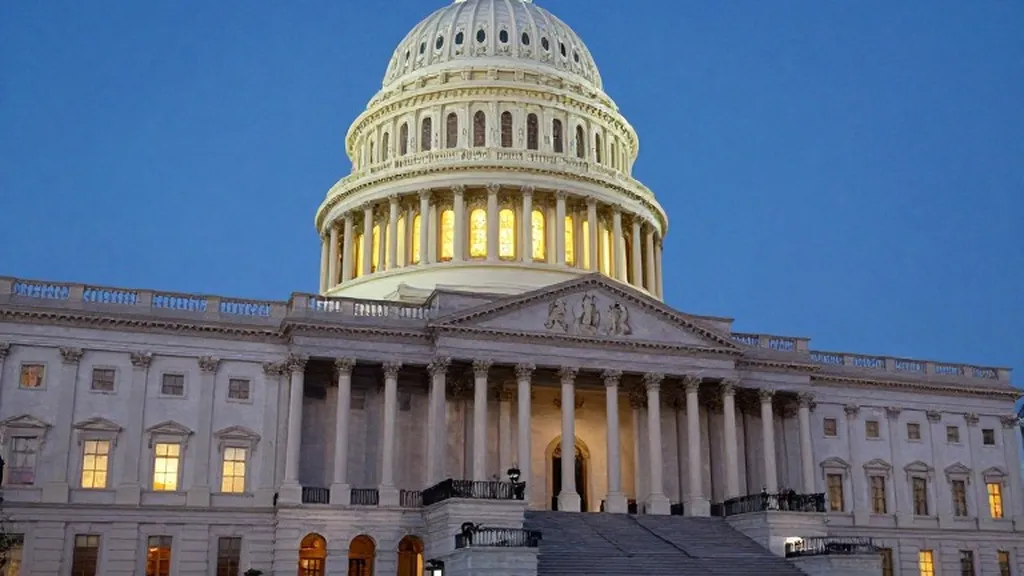
Washington, D.C. (AP) The 2026 midterm elections resulted in a decisive shift of power in Washington, with Democrats gaining control of both the U.S. House of Representatives and the U.S. Senate. According to Ballotpedia, Democrats have won 238 of the 435 House seats called so far, securing a clear majority over the 146 seats held by Republicans. In the Senate, Democrats have captured 20 of the 35 seats on the ballot, outpacing the 13 seats won by Republicans. This outcome marks a dramatic reversal from the previous cycle, where Republicans held majorities in both chambers.
The Associated Press reported that corruption was the primary concern for voters who ousted Republicans and handed Democrats control of Congress. The AP Voter Poll, which surveyed more than 100,000 voters nationwide, found that about half of U.S. voters said government corruption was crucial to their vote for Congress. Roughly three in 10 voters identified the state of democracy as the top issue facing the country. Among those voters, about eight in 10 supported the Democratic candidate in their local U.S. House race, while about two in 10 supported the Republican candidate.
Senior Democratic leaders in both chambers have already outlined an aggressive oversight agenda. House Democratic Leader Hakeem Jeffries, who is in line to become the next speaker, has not ruled out seeking a third impeachment of President Donald Trump. He has tasked Rep. Robert Garcia of California and Rep. Jamie Raskin of Maryland with leading the effort to link public corruption to affordability concerns. Garcia, the ranking Democrat on the Oversight and Government Reform Committee, posted on social media that Republicans should lawyer up as results came in. His committee will focus on Trump family business dealings, the administration's handling of the Jeffrey Epstein investigation, and Immigration and Customs Enforcement operations.
In the Senate, Sen. Chuck Schumer of New York, who is poised to return as majority leader, stated that Americans want the new majority to clean up corruption in government. He emphasized that no American should have to make tradeoffs at the supermarket while the president engages in inside trades on the stock market. The Senate is expected to conduct similar investigations, with Sen. Richard Blumenthal of Connecticut set to chair the Homeland Security Committee's Permanent Subcommittee on Investigations. Blumenthal told the Associated Press that the tentacles of corruption reach deep into the administration and have added costs to everyday Americans. His panel plans to examine Trump's real estate projects near the capital and his crypto dealings with special envoy Steve Witkoff.
The Republican response to the election results has been mixed. President Trump, who took a conciliatory tone in his public comments since the party's defeat, conceded that Democrats did a good job in their campaigns. He has tried to skirt personal blame while his administration continues to deny any wrongdoing regarding the self-enrichment allegations. The White House has long maintained that the president's financial activities are legal and beneficial to the nation, even as the new congressional majority prepares to use subpoena powers and expanded investigative staffs to probe those claims.
Statewide races also saw significant shifts in partisan control. Ballotpedia data indicates that Democrats gained five governorships, changing the balance of power in states including Texas, Georgia, Iowa, and Ohio. In Texas, Democrat Gina Hinojosa defeated Republican Governor Greg Abbott, marking the first statewide Democratic victory in the state in more than 30 years. This win was part of a broader Democratic sweep in the state, where the party also secured control of the state House and the U.S. Senate. The Texas results were influenced by high-profile spending from Elon Musk, who invested at least $445 million to help Republicans keep control of Congress.
Elon Musk, the world's first trillionaire, faced significant financial setbacks following the election. According to Forbes, Musk lost approximately $45 billion in net worth on Wednesday as investors reacted to the results. Shares in his companies Tesla and SpaceX dropped considerably, wiping out billions in market value. Musk had joked on social media that his election-interfering space lasers did not work this time. In Texas, Democratic candidates successfully targeted Musk, highlighting the tax breaks and grants his companies receive and framing the election as a contest between billionaires and everyday Texans. Rep. Gene Wu, chairman of the newly empowered Texas Democratic Caucus, stated that this era of open corruption is going to come to an end.
The election results have also sent ripples through financial markets. Reuters reported that Democrats' midterm sweep sent shares in U.S. tech giants soaring on Wednesday, as investors bet that potential curbs on new data-center construction could benefit established firms. However, the Nasdaq composite index experienced its deepest one-day drop since April 2025, wiping out trillions in market value on fears of increased scrutiny. Investors are now focused on the risk of political standoffs over the government's borrowing limit, with the potential for brinkmanship to unsettle markets. The new Democratic majority in Congress will have significant influence over trade policies, though experts note they will largely be unable to override a presidential veto on tariffs.
Voters in the 2026 elections also expressed deep dissatisfaction with the current direction of the country. The AP Voter Poll found that three-quarters of voters feel angry or dissatisfied with the country's current trajectory. This sentiment was particularly high in blue states but remained a majority view in red states as well. The economy was a central theme, with about four in 10 voters citing it as the top issue. Older voters, those age 65 or older, were more likely than younger voters to prioritize the state of democracy, while younger voters focused more on the economy. This generational divide influenced the messaging of candidates across the country, with Democrats emphasizing accountability and Republicans defending the president's economic record.