Rubio's India Trip Centers on $68 Billion AI Pledges and Oil Deals
The secretary of state skipped New Delhi for Mumbai and Jamnagar, a route that signals a focus on business transactions over diplomatic protocol.
By Nikhil Petrov ·
US Secretary of State Marco Rubio visited Mumbai and Jamnagar this week, bypassing New Delhi and Prime Minister Narendra Modi for a second consecutive trip to the subcontinent within five months. The itinerary prioritized India's financial and industrial hubs over its political center, a choice that signals the Trump administration's preference for direct commercial engagement.
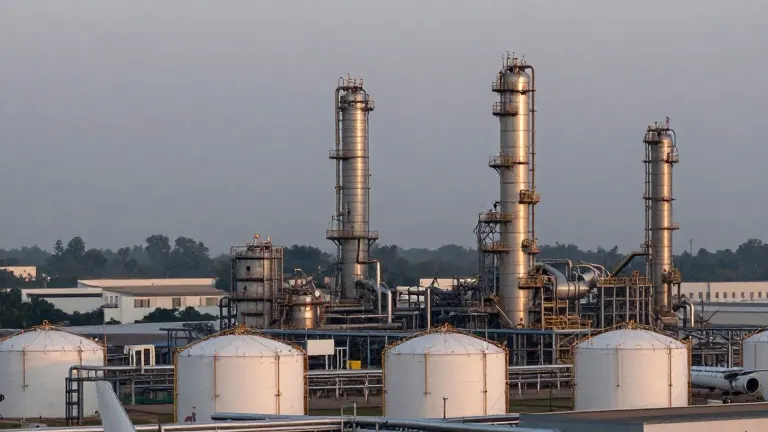
The visit included talks with Foreign Minister Subrahmanyam Jaishankar in Mumbai. Rubio then traveled to Jamnagar to meet Mukesh Ambani, chair of Reliance Industries. The Jamnagar stop occurred amid high US petrol prices ahead of the November 3 midterm elections. Analysts suggest the goal was to encourage Reliance to process more Venezuelan crude oil.
Milan Vaishnav, director of the South Asia Program at the Carnegie Endowment for International Peace, describes the current bilateral relationship as unbound. He notes that the administration views foreign policy primarily as deal-making. Vaishnav argues that the venue selection was deliberate, with Mumbai serving as a natural location for pursuing business agreements. He cautioned that the lack of a capital meeting does not necessarily indicate a rift, as bilateral meetings do not always require a capital setting.
The US-India relationship has faced friction during Donald Trump's second term, driven by tariffs and Indian purchases of Russian oil. In 2025, Trump imposed a 50% tariff on India, which was reduced to 18% this year without a comprehensive trade deal. Tensions also arose from H-1B visa restrictions that disproportionately affect Indian workers in Silicon Valley. In early October, New Delhi labeled remarks by Vice-President JD Vance regarding Indian professionals as deeply offensive.
Despite these friction points, bilateral trade reached a record in 2025. US technology companies have pledged nearly $68 billion for AI infrastructure in India. The two nations also conducted a record number of joint military exercises this year. Carnegie researcher Sameer Lalwani argues that the relationship is sturdier than public rhetoric suggests.
The administration's shift toward Pakistan has complicated the dynamic for New Delhi. Trump welcomed Pakistan's army chief, Asim Munir, to the White House in June after the general urged a Nobel peace prize nomination for the president. Vaishnav attributes this shift to Trump's personal dynamics and potential energy or crypto deals. For India, the personal rapport between Modi and Trump does not guarantee stability against sudden policy reversals.
Vaishnav identifies three main reasons for caution: the incomplete trade deal, the trust deficit among tech workers, and political friction. Commerce Secretary Howard Lutnick blamed Modi for the lack of a deal in January, a claim New Delhi has disputed. Vaishnav concludes that India's most critical investment remains political, focusing on maintaining a robust democracy and ensuring regulatory certainty for future business.
Source: The Guardian