Breaking: Musk's $300B Wipeout and the Magnificent Seven's $1T Plunge
Tesla and SpaceX lost over $300 billion as the Nasdaq fell 5.5 percent, capping a turbulent week for the tech sector and its biggest backer.
By Nikhil Petrov ·
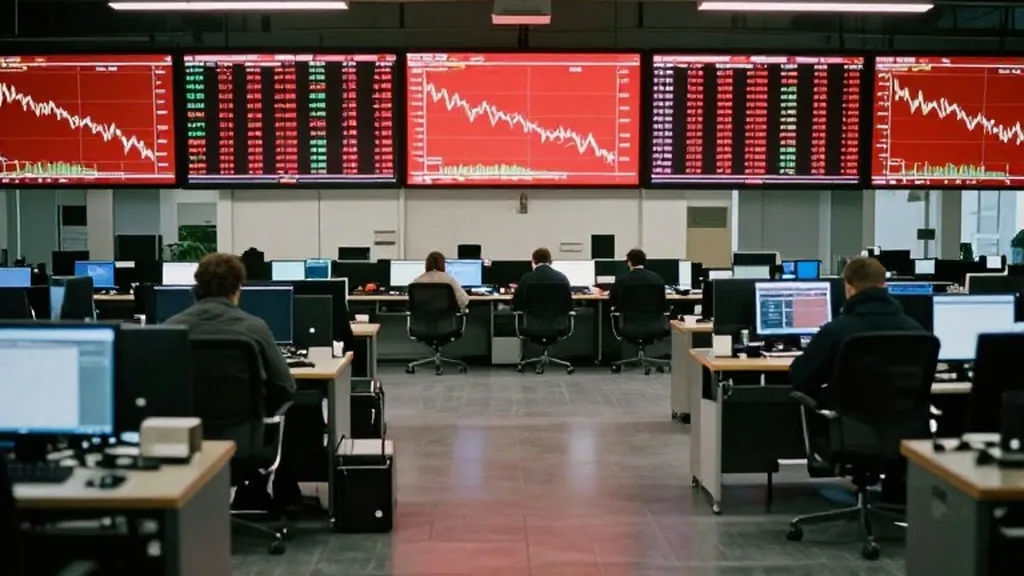
The Magnificent Seven technology companies shed approximately $1 trillion in value on Thursday, marking the single largest loss for the group in a trading day, according to BBC News. This massive evaporation of wealth occurred as the broader market sold off sharply, with the Nasdaq Composite falling 5.5 percent, its worst day in eighteen months. The decline pushed the index more than 11 percent below its recent record, placing it firmly in correction territory. An estimated $2.5 trillion in market value was wiped from the Nasdaq Composite, Dow Jones data cited by the BBC indicated, while the S&P 500 fell 4.3 percent, according to The New York Times and The Guardian.
Elon Musk’s companies were particularly hard hit, with Tesla falling nearly 11 percent and SpaceX dropping 8 percent. Together, these moves took more than $300 billion off the value of Musk’s enterprises, BBC News reported. This financial blow coincided with a difficult week for the billionaire, who had spent nearly $450 million backing Republican campaigns. His most significant political bet, a $45 million expenditure in support of Ken Paxton for the Texas Senate seat, failed when Texas went to the Democrats on Tuesday night. The loss of that key swing state seat, combined with the market rout, underscored the high stakes of Musk’s political engagement.
The selling pressure was driven by a combination of election results and deepening concerns over artificial intelligence valuations. Democrats swept the House and Senate in Tuesday’s midterm elections, a result that investors interpreted as a potential brake on the rapid expansion of data centers, CNBC reported. Campaigns across the country had emphasized slowing the spread of data centers, and voters rejected several measures aimed at restricting their development. In Texas, Democrat Gina Hinojosa won the governor’s race after campaigning on an immediate moratorium on new data center construction, according to CNBC. This victory, along with wins in Ohio, heightened fears that the facilities central to the AI buildout would face new regulatory hurdles.
Analysts noted that the market is now weighing the cost of the AI trade against its promised returns. Ted Parkhill, founder and chief executive of Incline Investment Management, told The Guardian that the market is moving from the promise of AI to the price of AI. He stated that while AI will be transformative in the long run, not every related stock is priced appropriately, predicting significant turmoil. Susannah Streeter, chief investment strategist at Wealth Club, added to BBC News that fresh panic over the AI trade has hit Wall Street hard. She observed that fears over the returns on vast AI infrastructure investments are colliding with the prospect of a sharp slowdown in data center construction.
The volatility was starkly visible in the options market, where the Cboe Volatility Index, or VIX, jumped as much as 5.7 points to above 28, its highest reading since March 31, 2026, according to CNBC. The Guardian reported the VIX was up 61 percent on the day. By midday, nearly 800,000 VIX call options had traded, which was 3.5 times the 30-day average, Cboe data showed. This surge in fear contrasted with the previous day’s optimism, when the Dow Jones Industrial Average had its biggest gain of the year. President Trump had celebrated that rally on Truth Social, writing that the stock market had hit another record high and that 401(k)s were through the roof, The Guardian noted.
Chip stocks led the rout on Thursday, with the Philadelphia Semiconductor Index falling more than 12 percent. The index has declined more than 30 percent since the beginning of October and is almost 40 percent below its June peak, The New York Times reported. Nvidia, the largest component of the Dow, fell 9.2 percent, losing more than $400 billion in market value. Other major chipmakers also suffered significant losses, with SanDisk falling more than 22 percent and Western Digital dropping 17 percent, according to BBC News. The iShares Semiconductor ETF fell 12 percent, its worst day since the breakout in March 2020, CNBC added.
Noel Smith, an options trader quoted by CNBC, described the session as a liquidation, noting that his data suggested de-risking but his gut indicated a potential dip-buying opportunity. He observed that oil and interest rates remained relatively unchanged, reinforcing the view that the selling was concentrated in growth and tech sectors. Neil Wilson, investor strategist at Saxo UK, told The Guardian that a complete capitulation-level event was playing out in tech stocks. He warned that the nature of sell-everything moves in this market requires looking for stability before any recovery can be confirmed.
Despite the panic, some strategists see a path to recovery. Gene Goldman, chief investment officer at Cetera Financial Group, told The New York Times that the sell-off had become exaggerated and predicted a bounce back soon. He noted that corrections in bull markets are typically short-lived, even if they are ugly in the moment. Frank Cappelleri, founder of CappThesis, pointed to historical data suggesting that the Nasdaq was higher twelve months after the election in all but one of thirteen midterm cycles since 1974, though he cautioned that the path can be volatile, CNBC reported.
The tech industry itself is responding to the political shift. Greg Brockman, president and co-founder of OpenAI, said at the WSJ Tech conference in Napa that everyone had been surprised by the reaction to data centers. He emphasized the need to be in communities rather than just tweeting about the benefits of infrastructure, according to BBC News. Dina Powell McCormick, president of Meta, told the same conference that the industry needed to double and triple down on telling the story of AI, highlighting the sector’s urgency to win public support.
Source: BBC News, The Guardian with Reuters, The New York Times, CNBC
More Business · Scam Watch · Report a business · Got a Story?