Nigeria's Taraba State Faces Deadly Ambush with Death Toll Surging to 40
A massive motorcycle assault in Binnari village has sparked a crisis over the true casualty count, with human rights groups claiming the official numbers significantly understate the loss of life.
By Nikhil Petrov ·
Forty. That is the number of people the human rights organization Amnesty International says were killed in a single morning raid on a rural community in eastern Nigeria. The figure stands in stark contrast to the initial count provided by local law enforcement, highlighting a growing gap between official reports and the grim reality on the ground.
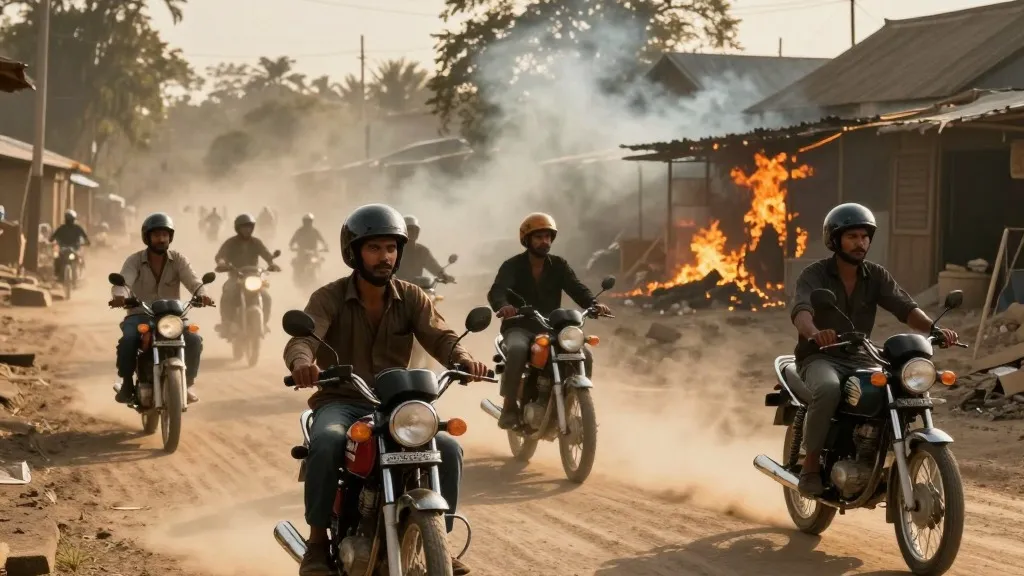
The violence unfolded in Binnari village within Taraba State. Police authorities announced on Saturday that they had recovered ten bodies by Friday evening. According to officers, a large contingent of armed men on motorcycles descended upon the settlement. During the raid, the attackers systematically looted local shops, seizing food supplies and other provisions before making their exit.
However, witnesses and independent observers suggest the damage was far more severe than the police statement indicated. Survivors of the attack told the AFP news agency that the death toll reached at least twenty. One resident, Sa'idu Nuhu, described the scene after the gunmen departed. He stated that the community counted more than twenty bodies and that several people remained missing. Another local man, Isiyaku Musa, corroborated this higher estimate, asserting that no fewer than twenty people had perished.
Amnesty International issued a statement on Saturday to challenge the lower official figure. The group claimed that forty individuals lost their lives in the assault. They noted that while police initially confirmed ten deaths, additional bodies were discovered later on Saturday, suggesting the crisis was still unfolding as the day progressed.
Community leaders provided specific details about the scale of the operation. Malam Abubakar Saifullahi, a local leader, reported that the assailants arrived on approximately fifty motorcycles. He noted that two men rode on each bike, creating a formidable wall of attackers. After the initial gunfire, the group moved through the village, raiding homes and businesses. They took cash, foodstuffs, and other provisions. They also seized motorcycles that residents had abandoned in their haste to escape the violence.
The timing of the attack added to the chaos. Residents said the gunmen opened fire just after Friday prayers. This timing caught many of the community members off guard as they were concluding their weekly religious observances. The sudden burst of gunfire turned a moment of peace into a scene of panic and bloodshed.
Amnesty International did not just report the numbers. The organization used the incident to criticize the Nigerian government's broader handling of rural security. The group stated that authorities continue to leave rural communities in parts of the north at the mercy of gunmen. These groups are repeatedly committing atrocities with impunity, according to the statement, indicating a systemic failure to protect remote populations.
This incident is part of a larger pattern of banditry that has become a significant problem in northwest and central Nigeria. Powerful gangs in these regions clash with police and military forces that are often overstretched. The conflicts take place in remote, hard-to-reach rural areas where state presence is minimal. Taraba State, located in the central-eastern region, is also facing this threat. These bandit gangs are not driven by any specific ideology. Instead, they raid villages, kidnap people for ransom, and levy taxes on farmers and miners in areas where the government has little reach.
Nigeria is simultaneously battling other armed conflicts. The country has been fighting an armed rebellion since the 2009 uprising by Boko Haram. In a separate development on Saturday, the Nigerian military announced that it had killed fifteen terrorists in an air strike. This operation took place in the northeastern state of Borno, demonstrating the multiple fronts on which the nation is engaged.
The discrepancy in the death toll from Binnari remains a key open question. While police maintain a lower count, the evidence from survivors and human rights advocates points to a much higher number of casualties. The incident underscores the difficulty of verifying events in remote areas and the ongoing strain on Nigeria's security apparatus.
Source: Al Jazeera