EU Weighs Terror List for Russian Spy Agency
Diplomats examine legal pathways to designate the GRU as a terrorist organization, following a series of hybrid attacks across member states.
By Nikhil Petrov ·
European Union officials are reviewing the legal basis for adding Russia’s military intelligence service, the GRU, to the bloc’s official terrorist list. This potential shift would change how national police and prosecutors handle suspects linked to the agency, particularly regarding the arrest and conviction of local networks that carry out operations on its behalf.
The move follows a recent increase in hybrid attacks on EU member states, many of which diplomats have linked to the GRU. While the agency is already under sanctions with its assets frozen, a formal terror designation would cover the entire institution. This would close a current loophole that allows individual officers who are not yet sanctioned to travel and operate within the bloc without being immediately targeted by counterterrorism frameworks.
The legal hurdle is substantial. EU law requires a prior court decision from an EU member state or a trusted third country to designate an entity as a terrorist organization. The precedent for this approach was set in January when the EU listed Iran’s Islamic Revolutionary Guard Corps. That decision relied on a 2023 ruling by the Dusseldorf higher regional court regarding an attempted arson attack on a synagogue in Bochum, Germany.
Finding a similar ruling for the GRU is more difficult. National prosecutors in member states have historically charged GRU officers with espionage or attempted murder rather than terrorism. For example, in the 2014 explosions at the Vrbetice ammunition depot in the Czech Republic, prosecutors named two GRU officers but could not secure a full conviction because the suspects remained in Russia. In the 2018 Novichok poisoning in Salisbury, England, the agents were charged in absentia with attempted murder and the use of chemical weapons.
Lithuania offers the strongest legal openings for the designation. In 2025, Lithuanian prosecutors charged 15 individuals with terrorism related to incendiary devices planted on cargo planes in 2024. Although these individuals were recruited proxies rather than direct GRU officers, the legal team in Brussels is assessing if the link is strong enough to satisfy the requirements. A separate trial is underway in the city of Siauliai, where six foreign nationals are accused of planning an arson attack on a military supplier in September 2024.
Political will remains a separate challenge. Designating the GRU requires unanimity among all 27 EU member states. Some officials argue that maintaining diplomatic channels is essential, fearing Moscow may retaliate by targeting European embassies or cultural houses. Others believe the current sanctions regime is sufficient, while more hawkish members argue that a terror listing is necessary to integrate GRU operations into Europol’s European Counter Terrorism Center.
Alongside the terror list debate, the EU continues its monthly expansion of sanctions against Russia. On October 12, foreign ministers approved the blacklisting of 1,600 new names, bringing the total number of sanctioned individuals and entities to over 4,600 since the start of the full-scale invasion in 2022. A new proposal presented to ambassadors on October 21 adds 12 individuals and 105 companies to this list.
The new sanctions target high-profile figures in Russia’s economy. Tatyana Kim, the founder and CEO of Wildberries, is proposed for inclusion because the retailer functions as a supply network for the Russian military. The list also includes Aleksandr Chachava, an owner of a major stake in Ozon, and Ruslan Baysarov, the chairman of BTS-Most. Sergei Matvienko, son of Federation Council chairwoman Valentina Matvienko, is also proposed for sanctioning due to his ownership of real estate and construction firms.
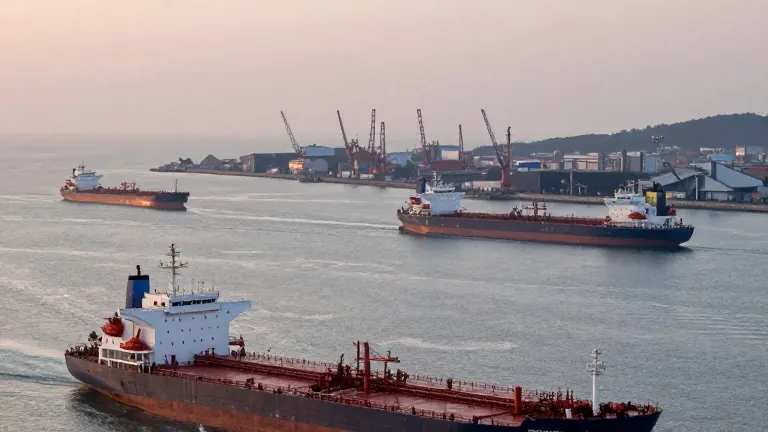
The proposal also targets non-Russian entities that aid the Kremlin. Several companies from the United Arab Emirates, the Seychelles, and Hong Kong are included on the list. These firms are accused of managing vessels that transport Russian oil or of purchasing petroleum products through shell companies. The EU foreign ministers are expected to vote on this package when they meet in Brussels on November 16.
Source: RFE/RL