Four Corners Floods: Historic Water Levels Threaten Colorado Towns
Evacuations were ordered in New Mexico and Arizona as the San Juan River approached its highest crest since 1911 in Colorado.
By Sanjay Ivanov ·
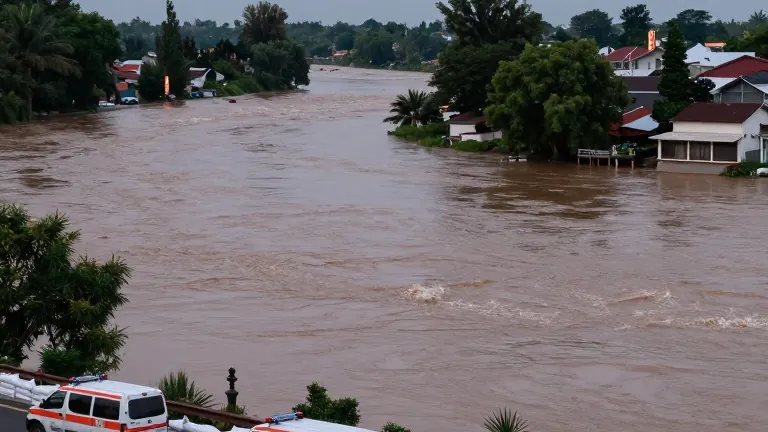
Mandatory evacuations swept across the Four Corners region on Sunday as heavy rains pushed river levels toward historic highs. In Pagosa Springs, Colorado, officials warned that the San Juan River could crest at 21.9 feet, a level that would surpass the record set during the devastating 1911 flood. At that earlier event, water reached 17.8 feet and destroyed much of the town. By sundown on Sunday, the river had already risen to approximately 14 feet, according to Vicky Shaffer, a spokesperson for Archuleta County. Roads entering and leaving the town were closed, and residents were urged to stay indoors unless they were under direct evacuation orders.
In nearby San Juan County, New Mexico, emergency management officials issued alerts for anyone living within half a mile of the Animas, La Plata, or San Juan rivers. A social media post from the county office instructed residents to move to higher ground as the river was expected to rise overnight. Elvira Arviso, a resident of Bloomfield, noted that she lives just under a mile from the San Juan River. She recalled previous floods coming within 200 yards of her home and said she was ready to leave if necessary. The wet weather had soaked the region since Saturday evening, with meteorologists predicting up to four inches of rain could fall by Monday. These totals represent months of precipitation arriving in a matter of days, according to Aaron Hardin, a National Weather Service meteorologist in Tucson.
The flooding extended well beyond Colorado. In Sedona, Arizona, officials ordered residents near Oak Creek to evacuate immediately after water rose and trapped people in their homes. Rescue crews used helicopters to pull residents from rooftops and submerged neighborhoods. Michelle Grimm, a longtime Sedona resident, said she had never seen the creek rise so close to the underside of a pedestrian bridge. She described the scene as perilous, noting that entire neighborhoods were submerged. At least 100 homes were in the evacuation zone, and nearly 20 residents required emergency assistance to relocate. No injuries or deaths had been reported as of Sunday afternoon. In other parts of Arizona, including Flagstaff and Tucson, police closed roads and residents filled sandbags to keep water out of basements and garages.
Political tensions emerged over the federal response to the ongoing disaster. New Mexico Governor Michelle Lujan Grisham criticized the White House on Thursday for not approving full Federal Emergency Management Agency (FEMA) assistance. While President Trump declared a presidential disaster earlier in the week, the approval did not include FEMA public assistance funds. These funds reimburse local and tribal governments for up to 75 percent of debris cleanup and emergency protection costs. The governor's office stated that FEMA funding was automatically approved in other New Mexico disasters but was missing here. Lujan Grisham said the state was forced to cover the costs while waiting for a federal commitment. She noted that at least 10,000 homes in San Juan County remained underwater following the floods that began on October 22.
Source: KUNM