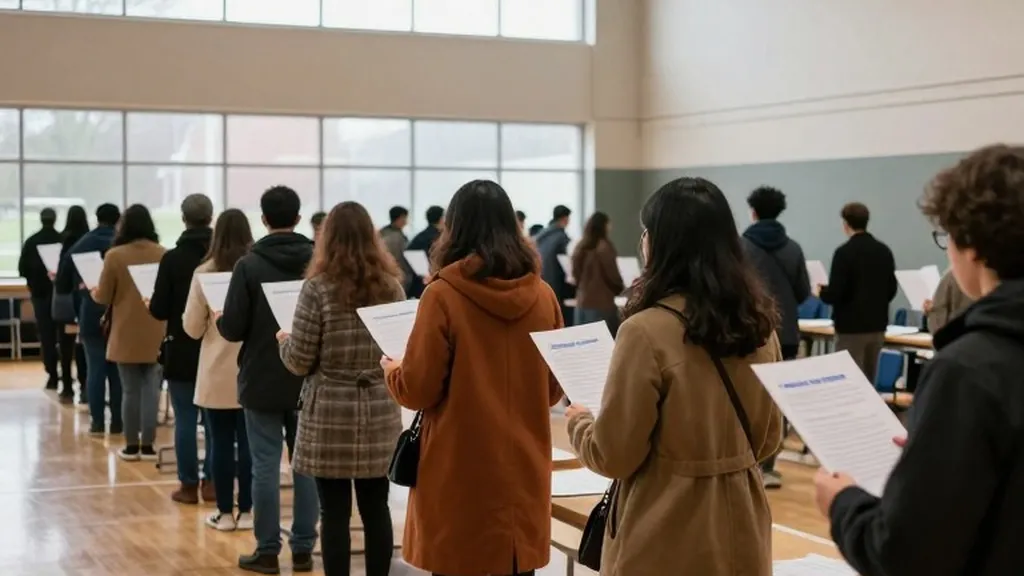
Breaking: Election Day is here! Make your selections for the midterm showdown
Voters across the nation are heading to the polls to decide the balance of power in Congress, with key Senate and House races determining who will control the government for the next two years.
By Nikhil Petrov ·
Voters across the United States are casting their ballots on Tuesday, November 3, 2026, in a pivotal midterm election that will determine which party controls Congress for the remainder of President Donald Trump's second term. The stakes are high as the country decides the direction of its government in the final two years of the current administration. According to Ballotpedia and USA.gov, the results will decide who holds the majority in both the House of Representatives and the Senate, as well as in numerous state governorships. This election is viewed as a referendum on the current administration's performance, with voters weighing in on economic conditions and national policy.
In the House of Representatives, all 435 seats are up for grabs. Republicans currently hold 218 seats, while Democrats hold 214, with one independent and several vacancies. For Democrats to gain a majority, they need a net gain of three districts, whereas Republicans can afford to lose no more than two seats. Ballotpedia has identified 46 battleground districts that could swing the balance of power. In the Senate, 35 seats are contested, including 33 regular elections and two special elections. Republicans hold 53 seats and Democrats 45, plus two independents who caucus with Democrats. Democrats need a net gain of four seats to take control, while Republicans can only lose two. These numbers highlight the tight margins that could decide the outcome of the midterms.
Governor races are also a major focus, with 36 governorships on the ballot. Republicans currently hold 26 governor's offices and Democrats 24, with each party holding 18 of the offices currently up for election. Nineteen of these races do not feature an incumbent, as many governors are term-limited or have chosen not to run. Democrats are hoping to secure a nationwide majority of governorships for the first time in two decades, a goal that has eluded them since 2010. The outcome of these races will influence state policies and set the stage for future national elections.
Several states are using new congressional maps following mid-decade redistricting, including California, Florida, Missouri, North Carolina, Tennessee, and Texas. Ohio is also using a new map. These changes may alter the dynamics of local races and affect how votes are counted. According to the Associated Press, the election is being watched closely for its impact on the broader political landscape, with many candidates and parties strategizing based on these new boundaries. The redistricting efforts have been a point of contention, with both parties arguing over the fairness of the new districts.
The Associated Press describes the election as a referendum on Trump's second term, noting that voters are struggling with high prices and are angry over an unpopular war with Iran. According to AP-NORC polling, 35% of U.S. adults approve of Trump's job performance, while 25% approve of his handling of the economy. About 7 in 10 respondents say the country is heading in the wrong direction, with most blaming the president for high prices. These statistics reflect the divided opinion among the American public and the challenges facing the current administration as it seeks to retain power.
More than 57 million people had already voted as of Monday, surpassing the early vote of four years ago in many closely watched states. This high turnout indicates strong engagement from voters who are eager to make their voices heard. Republicans are bracing for the possibility of losing the House and are fighting to hold the Senate, while Democrats are cautiously optimistic. The Associated Press notes that one or two seats could tip the balance in either chamber, making every vote count. This close race underscores the importance of voter participation in determining the outcome of the midterms.
President Trump held dozens of rallies to support Republican candidates, ending his schedule on Sunday in Salina, Kansas, where he urged voters to pretend he was on the ballot. His rallies included stops in Mississippi, South Carolina, and Texas, where he sought to energize the Republican base. Many Republican candidates kept their distance from the president, reflecting a complex dynamic within the party. Trump has also continued to make claims about voting fraud, including that noncitizens vote in large numbers, which has added tension to the election process. His administration's legal actions in Alaska and California have further fueled debates over the integrity of the election.
The 2026 elections are likely to be the most expensive in history, with Republican committees outraising and outspending their Democratic counterparts. This spending surge was helped by Trump-affiliated groups and Elon Musk, while at the candidate level, Democrats outraised their opponents. According to an AP analysis of AdImpact data, 88.1% of Republican general election TV ad spending went to states and districts that Trump won in 2024, including more than $850 million in areas where he won by 10 points or more. This financial disparity highlights the significant resources being deployed to influence the outcome of the election.
Joe Gruters, the RNC Chairman, stated that everything depends on turnout, emphasizing that if Republicans turn out their voters, they will win. In contrast, Suzan DelBene, the DCCC Chair, noted that the American people are angry and want change. These quotes reflect the different strategies and messages being used by each party to mobilize their supporters. The competition for voter attention and loyalty is intense, with both parties vying for the support of undecided and swing voters who could tip the balance in key races.
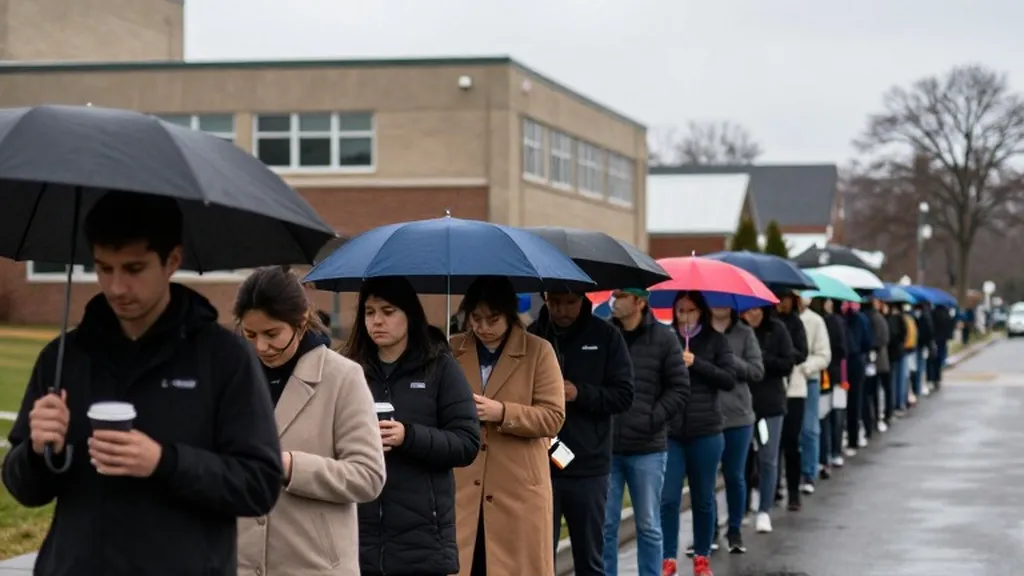
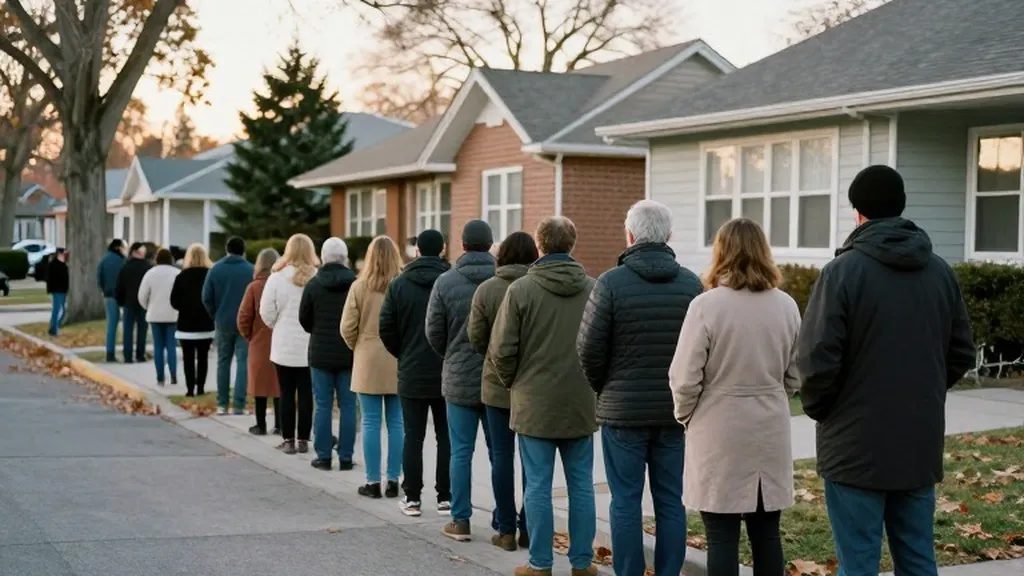
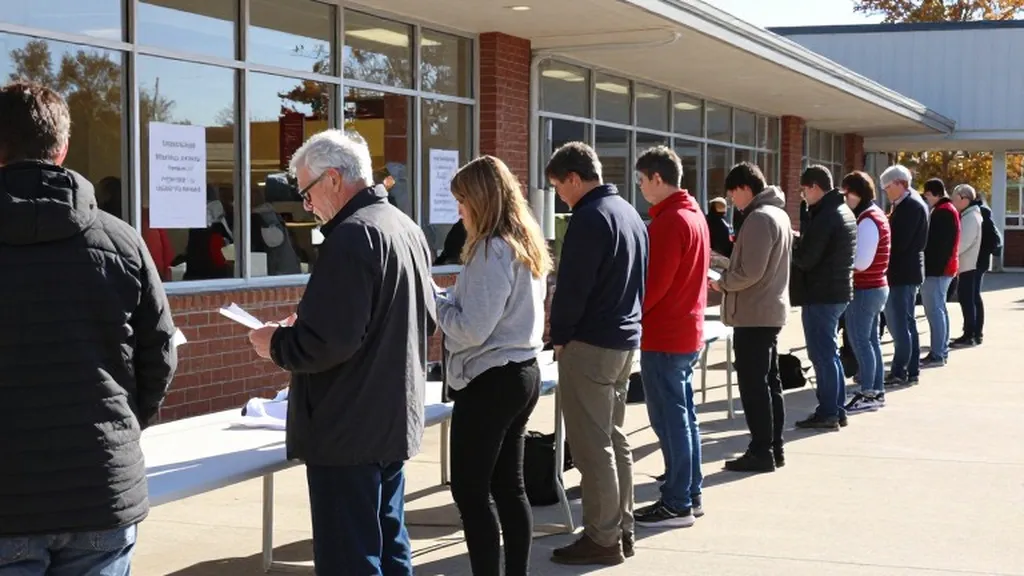
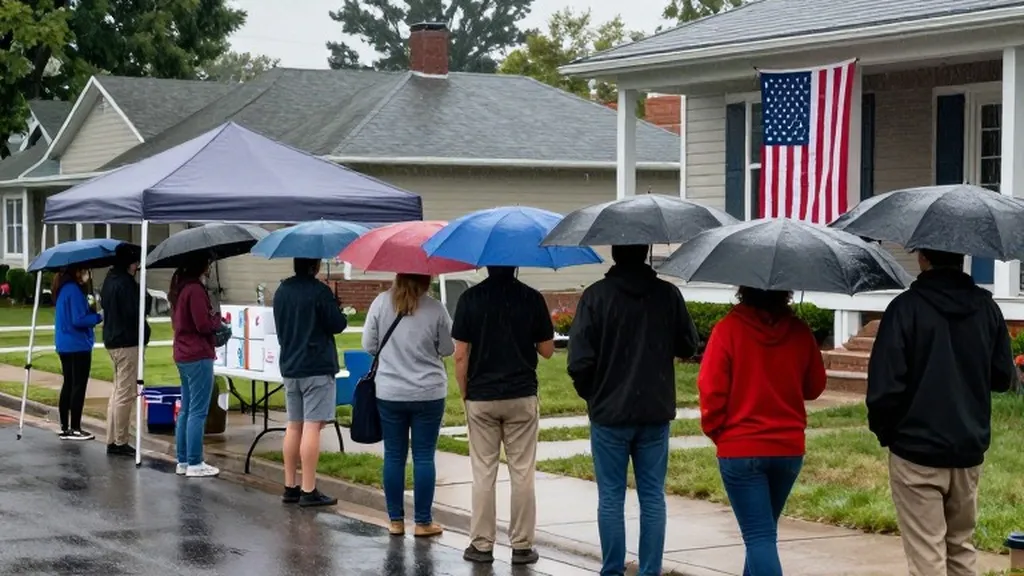
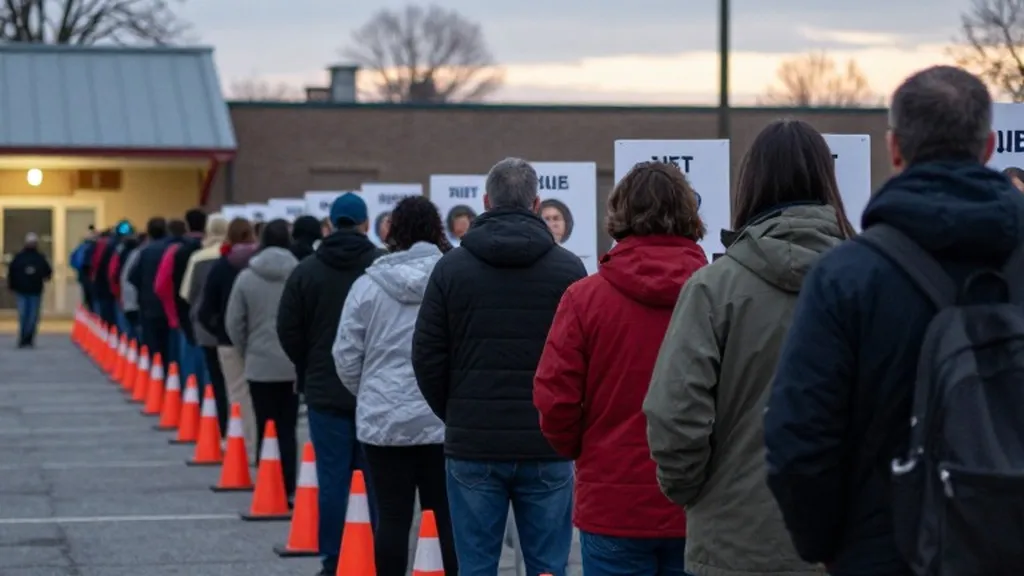
Voters are encouraged to find their polling place at vote.gov or their state election office and to stay in line, as anyone in line when polls close is entitled to vote. Poll hours vary by state, with most opening between 6 a.m. and 8 a.m. and closing between 6 p.m. and 9 p.m. It is important for voters to check their state's specific rules regarding identification and voting procedures. The U.S. Postal Service has added hours, staff, and special lines to ensure that mail ballots are counted on time, addressing concerns about the timely processing of votes.
A federal judge temporarily barred the Trump administration from carrying out a plan to prevent noncitizen voting, a move that critics say risks disenfranchising eligible voters. The judge also ordered the administration to stop demanding that California election officials segregate ballots cast by people on lists of suspected noncitizens. These legal developments have added another layer of complexity to the election, with both parties closely monitoring the courts for decisions that could impact the counting of votes. The outcome of these legal battles could have a significant impact on the final results of the midterms.
Wall Street is also watching the election closely, with Reuters noting that the results could add to investor concerns about AI spending and debt ceiling negotiations. The political outcome of the midterms will have implications for economic policy and market stability, as investors seek clarity on the direction of the country's financial future. The interplay between political and economic factors makes this election a critical moment for both the nation and the global economy.