California balcony solar law faces lease and certification hurdles
The Plug and Play Solar Act allows renters to install small panels, but landlords and certifiers have raised questions about liability and safety standards.
By Daniel Bernard ·
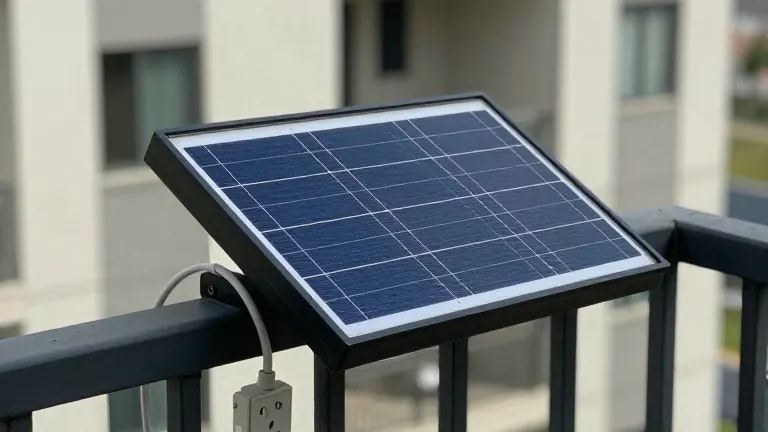
California’s new Plug and Play Solar Act, signed by Gov. Gavin Newsom last month, allows residents to plug small solar panels directly into wall outlets without utility approval. The law takes effect in January, but its application to renters remains legally ambiguous. Joseph Kaatz, a senior staff attorney at the Energy Policy Initiatives Center at the University of San Diego School of Law, called the tenant rights question "a bit of an open question." While the law enables certified panels under 1,200 watts, it does not explicitly override lease agreements that prohibit such installations.
The primary conflict centers on the gap between existing solar protections and rental housing. California’s Solar Rights Act, established in the 1970s, protects homeowners from unreasonable restrictions by homeowner associations. Kaatz noted that this law was designed for property owners, not tenants, and has not yet been tested in rental disputes. Unlike New Jersey, Colorado, Virginia, and Vermont, which have recently passed bills specifically protecting renters, California’s legislation leaves the matter to interpretation. This lack of clarity has prompted some landlords to voice opposition, citing potential insurance complications and liability risks.
Industry groups are divided on how to proceed. Tanya Mannes Castaneda, a spokesperson for the Southern California Rental Housing Assn., stated that the association is analyzing the law’s impact on members because it does not specifically address rental housing. Conversely, Daniel Yukelson, executive director of the Apartment Assn. of Greater Los Angeles, read the bill as allowing tenants to install the systems. Yukelson said his group may seek an amendment next year to add parameters regarding trip hazards and fire risks, noting that the current law lacks restrictions on where panels can be installed or how wires can be run.
Market adoption among renters faces technical and financial barriers. Michael Scherer, co-founder of Craftstrom, said that 95% of the company’s U.S. customers are homeowners. He explained that a typical 400-watt panel, which might fit on a balcony, can power a refrigerator and small appliances but does little to offset the cost of air conditioning. Bright Saver, a nonprofit selling two 180-watt panels for $414, estimates a 360-watt system would save a resident in East Hollywood between $113 and $142 in the first year. That savings amount would cover the initial cost in three to four years, assuming a 7% annual rate increase.
Certification standards also present a hurdle. Cora Stryker, co-founder of Bright Saver, said the main issue is that current U.S. certification requires an electrician to rewire outlets, a step renters rarely take. Bright Saver is seeking an exemption for kits under 360 watts from UL Solutions, the primary certifier. Colleen O’Brien, a principal engineer at UL Solutions, stated in a statement that lower wattage does not eliminate risks of overheating electrical components. As of now, no panel kits have received approval under the new law, though advocates expect at least one to be cleared by the end of the year.
Source: Los Angeles Times
More Business · Scam Watch · Report a business · Got a Story?