Lula wins Brazil presidency, Bolsonaro plans legal fight
The incumbent secured a fourth term with over 64 million votes, but his opponent has requested an annulment while US President Donald Trump questions the count.
By Nikhil Petrov ·
President Luiz Inácio Lula da Silva won Brazil's presidential runoff on Sunday, but his victory is already under attack from both sides of the Atlantic. His opponent, Sen. Flávio Bolsonaro, has formally requested an annulment of the results, while US President Donald Trump has publicly suggested the election was rigged. Lula is expected to take office on Jan. 5, 2027, for his fourth non-consecutive term.
The margin of victory was decisive. Lula received more than 64 million votes, while Bolsonaro garnered just under 60 million, a difference of nearly 4 percent. This outcome reversed a trend seen in the first round, where Bolsonaro held a strong lead. Analysts note that 14.1 million additional voters participated in the second round, with three-quarters of those new ballots going to Lula.
Trump made his claims on Monday without providing specific evidence. Speaking before a trip to Mississippi, he told reporters, “Elections have to be indisputable and it looked very bad to me.” He added, “I thought it had a very bad look, the way it was tabulated,” and concluded, “It looked like another rigged election, frankly.”
Flávio Bolsonaro said at a Sunday news conference that he would seek to annul the election. The request followed a chaotic extension of voting hours that was granted at the request of both candidates. It remains unclear what legal path Bolsonaro will take to overturn the result. His father, former President Jair Bolsonaro, who is serving a 27-year sentence for a coup attempt, previously failed to contest his loss to Lula in 2022. Flávio Bolsonaro visited his father under house arrest on Monday.
The surge in Lula's support was driven in large part by a digital campaign led by lawmaker André Janones. Janones managed a WhatsApp channel called “Lula's Army” that gathered almost 11 million people. This operation mobilized previously uncommitted voters, those who had voted blank, and former non-voters. Professor Oliver Stuenkel of Fundação Getulio Vargas noted that the strategy embraced an aggressive style of constant messaging to counter earlier infighting within the campaign.
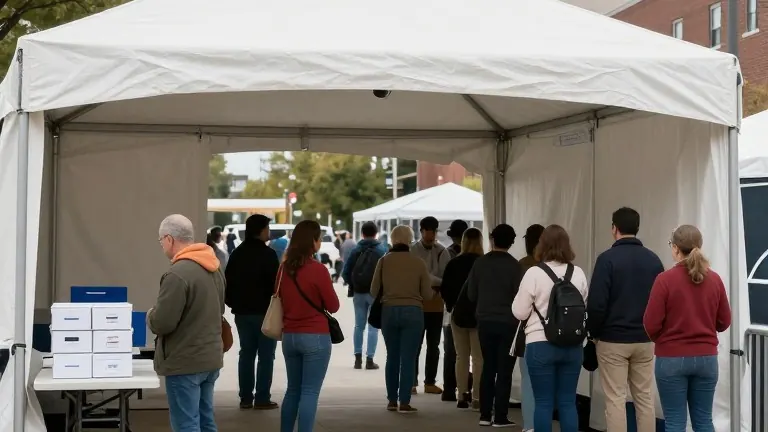
The extension of voting hours on Sunday added complexity to the count. A Supreme Court justice approved the delay minutes before polls were set to close at 5 p.m. Lula requested the extension due to public transportation issues in São Paulo and Salvador, while Bolsonaro cited heavy rains in the south. Many polling stations did not receive the news until they were already closing.
Despite the challenges, Brazil’s electoral authority has recognized Lula's victory. Kassio Nunes, president of the electoral authority, acknowledged the result on Sunday. Nunes was appointed to the Supreme Court by Jair Bolsonaro. Brian Winter, editor-in-chief of Americas Quarterly, said the situation presents an uphill battle for the challenger because major Brazilian power brokers are closing ranks behind Lula, sometimes begrudgingly.
Lula faces a right-wing Congress where Bolsonaro's party holds the most seats. His term will also coincide with potential fiscal crises and high political polarization. The next step is for Flávio Bolsonaro to formalize his legal challenge to the outcome of the runoff.
Source: ABC News