USDA allocates $15 billion to farm sector ahead of midterm elections
Federal officials outlined new subsidies and loans to offset high diesel and fertilizer costs, with payments scheduled to be detailed this month.
By Sanjay Ivanov ·
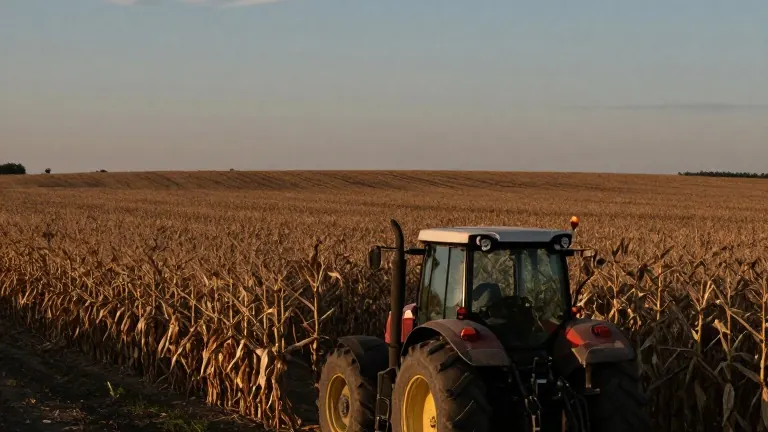
Agricultural producers across the United States have faced rising operational costs for the past year, a trend that has intensified in the weeks leading up to the legislative elections on Tuesday.
The administration of President Donald Trump announced a $15 billion support package for the sector. These initiatives are designed to compensate farmers for increases in diesel and fertilizer prices, costs that the source attributes to tariffs imposed by the president and the ongoing conflict in Iran.
The Department of Agriculture, or USDA, detailed the breakdown of these funds on Thursday. The agency plans to distribute $13.8 billion in safety net program payments to eligible producers starting with the 2025 harvest year. These payments will address deficits for growers of major commodities, including corn, soybeans, wheat, and rice.
More than half of the total $15 billion allocation is reserved for an $8 billion one-time payment plan. This specific fund targets farmers affected by the sharp rise in diesel prices. The agency stated that it will release further details on these payments during the current month, though the exact timeline for funds reaching producers remains undetermined.
The remaining funds are distributed across several other categories. At least $5 billion in guaranteed loans is directed toward ranchers and fishermen. An additional $1.8 billion is allocated to landowners who participated in conservation programs. The USDA also earmarked $573 million for fertilizer manufacturing projects and $57 million for the expansion of meat processing facilities. Specialized crop producers will receive $86.6 million in grants for innovative projects.
In a separate action, the agency announced it will purchase up to $472.5 million in agricultural products. These goods will be distributed to charitable programs. The USDA also outlined efforts to expand sales of off-road diesel, increase transparency in cattle sales data, and strengthen wolf management policies to protect livestock.
Diesel prices have been a central concern for producers. On Friday, the national average price stood at $6.32 per gallon. This figure is 70 percent higher than the price recorded one year prior, according to data from the American Automobile Association. Filling a 100-gallon tank now costs $260 more than it did a year ago.
Gregg Ibendahl, an agricultural management specialist at Kansas State University, calculated that the new payments will cover the increase in fuel costs. He noted that the funds could also help offset high fertilizer prices. However, he observed that these ad hoc payments do not address the broader issues pressuring market prices.
Alexandra Middlewood, an associate professor of political science at Wichita State University, reported mixed reactions from farmers. Many are relieved that their businesses will survive the year, but they view the programs as temporary rescues rather than long-term solutions. Middlewood noted that cost of living and healthcare access remain the primary concerns for rural voters.
Michael Smith, a political science professor at Emporia State University, explained that while many rural voters favor the president, some of his policies have hurt the industry. He pointed to immigration enforcement and cuts to foreign aid and SNAP benefits as factors affecting the agricultural market. Smith emphasized that while the president is not on the ballot, his policies are, and independent voters will play a decisive role in the outcome.
Source: KTVW-DT
More Business · Scam Watch · Report a business · Got a Story?