Hawksbill nail art shifts from traditional French tips to layered, irregular marbled designs
Vogue Mexico named the trend for 2026, noting that translucent layers of amber, chocolate, and black create a distinct depth that differs from standard solid coats.
By Sanjay Ivanov ·
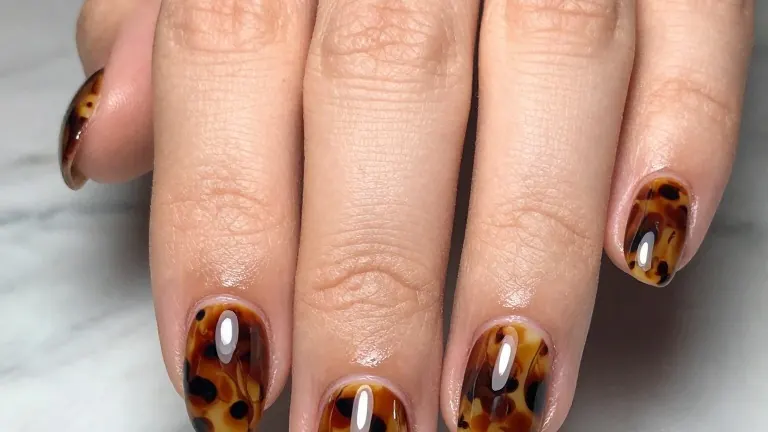
The hawksbill nail effect is gaining traction in 2026 as a departure from uniform manicures. The style relies on translucent layers of amber, honey, chocolate, and black to produce an irregular, marbled pattern. Vogue Mexico included the look in its list of beauty trends for the year. The design creates visual depth by allowing lower tones to show through the top coats.
One variation places the hawksbill pattern only on the tips of the nails. This approach keeps a nude or clear base on the rest of the nail bed. It offers a subtle entry point for those who want the marbled look without covering the entire surface.
Another option concentrates the design on a single finger, typically the ring finger. The remaining nails use solid shades of brown, beige, or black. This distribution creates a focal point without repeating the motif across the hand. Gold accents or metallic lines can also be added to the amber base for contrast.
The classic version uses a honey-colored translucent base with brown spots of varying sizes and small black touches. A lighter adaptation substitutes dark brown with honey yellow, warm beige, and translucent caramel. This version maintains the irregular spots but reduces the overall contrast. A cool-toned variation mixes amber and brown with pastel blue, either on separate fingers or in a French manicure style.
The pattern adapts to short, square nails. In this case, smaller, irregular spots help preserve detail without making the surface look too dark. A glossy, glass-like finish applies the pattern to all ten fingers. The top coat adds a smooth, reflective surface while keeping the underlying translucent layers visible. For a deeper palette, the design pairs with burgundy or plum polish on alternating fingers, creating a contrast between the warm amber tones and the reddish or purple hues.
Source: XHJK-TDT