What San Diego voters need to know for the Nov. 3 midterm elections
Ballots are due by 8 p.m. Tuesday, but the deadline to register has passed and the governor's race is a head-to-head contest.
By Sanjay Ivanov ·
San Diego voters face a tight schedule to participate in the 2026 midterm elections. The primary conflict for many eligible voters is that the registration deadline has already passed, yet they can still cast a ballot if they act correctly on Election Day. Tuesday, Nov. 3, is the date for federal, state, and local contests across the county.
The most prominent state race pits Democrat Xavier Becerra against Republican Steve Hilton for governor. Becerra, a former U.S. secretary of health and human services, challenges Hilton, a former Fox News political commentator, for the seat vacated by Gavin Newsom. Newsom has reached the state's maximum term limit. This race is part of a broader slate that includes contests for attorney general, lieutenant governor, secretary of state, controller, insurance commissioner, and treasurer.
Local elections in San Diego County include two seats on the Board of Supervisors and congressional races in the 48th and 49th districts. Voters residing in the city of San Diego will also choose representatives for districts 2, 4, 6, and 8. The ballot features 14 California propositions covering housing, taxes, environmental regulations, and election rules. Two additional countywide measures address supervisor term limits and sales tax.
Registration closed on Oct. 19 for online and mail applications. However, California law allows for conditional registration. Eligible voters who missed the deadline can register and vote using a provisional ballot at any vote center or at the Registrar of Voters office at 5600 Overland Ave. in San Diego. This process requires voters to be U.S. citizens, California residents, and at least 18 years old on Election Day. The vote is counted once the registration status is verified, and the action registers the individual for future elections.
Polls are open from 7 a.m. to 8 p.m. on Tuesday. Voters in line by 8 p.m. are entitled to cast their ballot. Early in-person voting began on Oct. 24. Mail ballots were sent to registered voters starting the week of Oct. 5. If a voter has not received a ballot, they can request a replacement through the Registrar of Voters website. Mailed ballots must be postmarked by Nov. 3 and received by the Registrar by Nov. 10 to be counted.
Voters can return completed ballots by mail without a stamp or by using one of the county's more than 100 official drop boxes. These red, white, and blue boxes are located in public spaces such as libraries and parks. They opened on Oct. 4 and remain accessible until 8 p.m. on Election Day. There is one drop box for every 15,000 registered voters. Voters can use any drop box in the county regardless of their registration address.
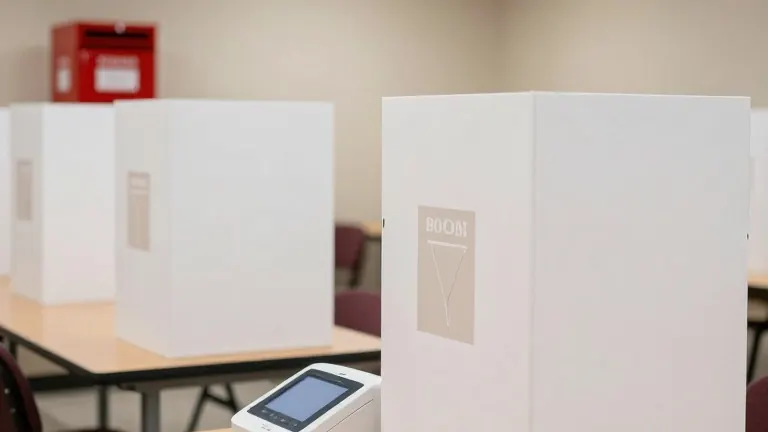
In-person voting does not typically require identification. An ID is only needed if the voter is voting in a federal election for the first time, registered by mail or online, and did not provide a California ID or Social Security number during registration. Upon arrival, voters sign an electronic roster called the ePollbook. A barcode on the return envelope suspends the mail ballot to prevent double counting. Voters mark their selections on a touchscreen device, and the machine prints the official ballot for tabulation.
Online voting is not permitted in California. The state has until Dec. 3 to certify final results. Preliminary numbers will be released as soon as polls close. Some races may be decided immediately, while others may take days or weeks to resolve. Voters who encounter issues can report complaints to the California Secretary of State. Voter fraud and suppression are classified as felonies.
Source: KNSD