Houthi Siege Chokes Taiz as Water Scarcity Deepens
Escalating conflict and restricted supply lines have pushed the Yemeni city to the edge of a humanitarian collapse, forcing residents to ration every drop.
By Lauren Collins ·
The daily struggle for survival in Taiz has intensified as the Houthi blockade around the city tightens, transforming a decade-long water shortage into an acute crisis. For more than ten years, residents of Yemen’s third-largest city have faced difficulties securing drinking water, but humanitarian organizations report that conditions have deteriorated sharply in recent weeks. The Iran-backed rebels have expanded their control over the area, squeezing the population of over one million people as their conflict with government forces escalates. The result is a city where basic necessities are becoming increasingly unobtainable, forcing families to make difficult choices about how to stretch limited resources.
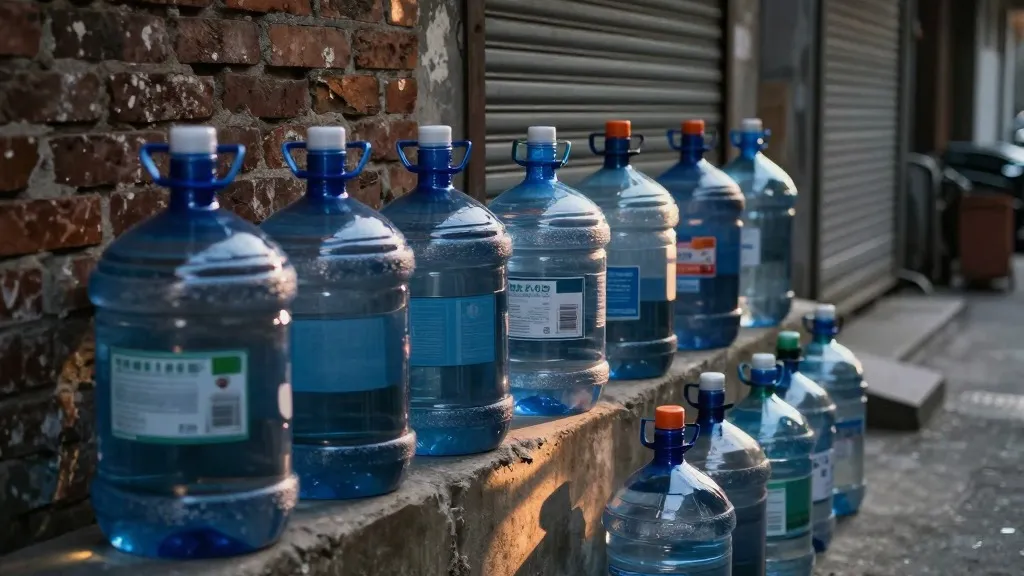
Aid groups indicate that the needs of Taiz’s residents are now barely being met due to a convergence of logistical failures. Access to local wells is restricted, and desalination plants are operating below capacity because of fuel shortages. Water trucks, which previously served as a reliable alternative, are largely blocked from entering the city. This disruption has forced households to rely on bottled water, which has seen a price increase of up to 75% in just a few weeks. Some families have resorted to purchasing this essential commodity on credit to maintain their daily routines.
The impact on daily life is visible in the habits of local families. Hadil al-Shahid, a hair salon owner, described how her household, which includes two young children, used to consume about 10 liters of bottled water per day. They now stretch that same amount to last four days. "We stopped drinking coffee and tea, which we used to drink daily," al-Shahid said by phone. Her salon has closed as customers prioritize spending on food and water, and her children now subsist primarily on rice, bread, and cheese. This pattern of reduced consumption reflects a broader shift in how Taiz’s population manages its diminishing resources.
The siege extends beyond water to affect food, fuel, and public health. Grocery shortages have driven up the cost of staples like flour and rice by approximately 50% since the summer. Fuel scarcity is hampering hospitals and sanitation services, increasing the risk of disease. Amnesty International has urged the Houthis to open roads into the city immediately, warning that Taiz is being pushed to "the brink of a severe humanitarian disaster." The interconnected nature of these shortages means that a lack of fuel for waste collection or community kitchens directly exacerbates health risks, particularly the threat of cholera.
The military and political context has shifted significantly since August, when Yemen became a wider front in the regional conflict. The Houthis captured the port city of Mokha, a strategic location for Red Sea shipping, before advancing on Taiz. This expansion has cut off residents from nearby wells and increased the risk for truckers, some of whom have tripled their rates to make the dangerous journey. The United Nations reports that Taiz province has absorbed an estimated 124,000 displaced people since August, roughly half of those moved elsewhere in the country. Jens Laerke, a UN spokesperson, noted that some displaced families survive on one meal a day in makeshift shelters.
Economic pressures are further compounded by soaring energy costs. Hani Bafaqih of the aid group CARE stated that cooking gas prices have more than quadrupled, leading some families to burn wood, charcoal, or cardboard for heat and cooking. Ahmed Abdel Gaber, who was displaced with nine relatives and now shelters in the ruins of a building, said his income from hauling construction materials has become unreliable. "We heavily rely on assistance and donations from people to get food," he said. His family hears explosions daily from fighting about five kilometers away, preventing them from returning to their mountain village for safety.
The strategic importance of Taiz remains a central focus for both sides of the conflict. The government still holds the city center, but the siege complicates resupplying forces that face resistance in the surrounding hills. Analysts suggest that controlling Taiz is crucial if the Houthis aim to push south toward Aden and Lahj. Ahmed Nagi of the International Crisis Group cautioned that any attempt to seize parts of the city would likely result in "a prolonged and costly battle." Three Houthi officials, speaking anonymously, claimed the group controls about 80% of the surrounding countryside and several neighborhoods inside the city, although these figures could not be independently verified.
Foreign Minister Afrah al-Zouba has acknowledged the rebels’ tightening grip on the region. The danger to civilians is tangible, with Houthi missiles hitting a residential area earlier this week and killing two teenage girls. For many, leaving the city is not a viable option. Al-Shahid, who cannot afford to relocate, emphasized the reality of their situation. "Staying in our home is inevitable," she said, "whether it be a matter of life or death."
As the conflict continues, the outlook for Taiz remains precarious. The combination of aging infrastructure, population growth, and military pressure has created a fragile system that is now under severe strain. Humanitarian experts warn that without immediate access to roads and resources, the risk of disease and starvation will continue to rise. The situation in Taiz serves as a stark indicator of the broader humanitarian toll of the Yemeni civil war, where the battle for territory is exacting a heavy price on the civilian population.
Source: NPR