22: The New Estimate for Starship Launches Needed for Moon Landing
NASA officials now suggest that 22 Starship flights may be required to fuel a lunar lander, raising questions about the timeline for Artemis missions.
By Samir Nasser ·
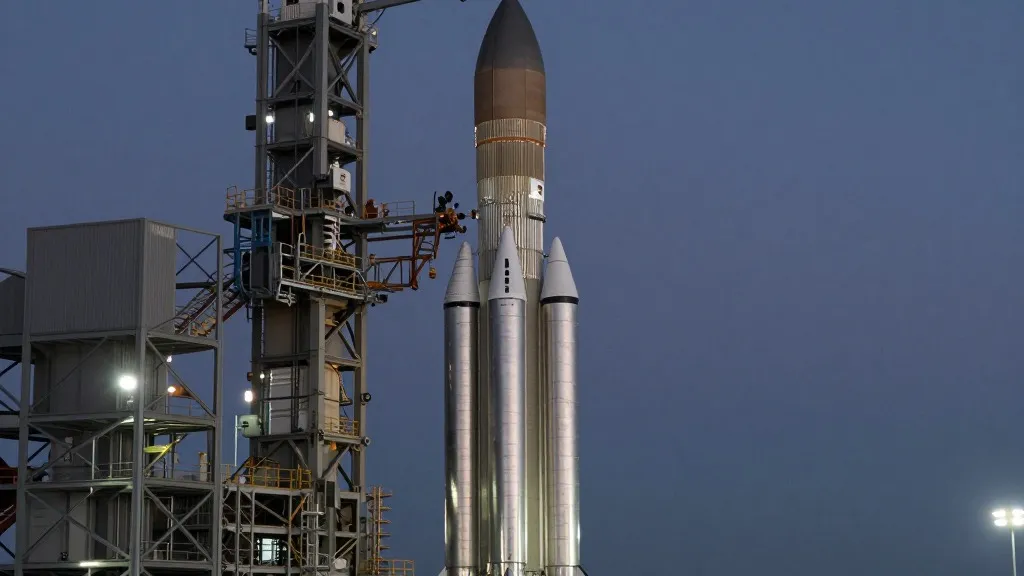
NASA has traditionally treated the number of rocket launches required to fuel a lunar lander as a closely guarded secret, often comparing its sensitivity to nuclear codes. However, new estimates suggest the agency now believes 22 Starship launches are necessary to send a crewed vehicle to the Moon and back, a figure that significantly exceeds previous internal hopes.
This specific metric is central to the Artemis Program, which aims to return humans to the lunar surface. The number represents the total count of Starship rockets needed to deliver liquid oxygen and methane propellant to a depot in low-Earth orbit. Once fully fueled, the depot would enable a lander to travel to the Moon, land, and return to lunar orbit.
Historically, NASA officials have been reluctant to pin down this figure, citing uncertainty. In 2023, Lisa Watson-Morgan, then-director of the Human Landing System, told Ars Technica that the agency had a general idea but was hesitant to provide an exact number. She later described the requirement as being in the “high single digits to the low double digits,” implying roughly a dozen launches. Other officials had previously cited “high teens” as a possibility.
The assumption behind these lower estimates was that SpaceX would dramatically increase the lift capacity of the Starship rocket, thereby reducing the number of tanker flights needed. Each flight would deliver fuel to a stationary depot Starship in orbit. A dozen launches would mean one initial depot launch followed by eleven tanker flights to complete the fuel load.
Concerns are now mounting among some NASA officials that the necessary improvements in Starship’s lifting capacity are not occurring quickly enough. This delay threatens to limit the role SpaceX’s Starship can play in supporting NASA’s goal of returning humans to the Moon within the current decade. The shift toward a higher number reflects a growing caution regarding the vehicle's near-term performance.
The new estimate surfaced during the quarterly meeting of the NASA Aerospace Safety Advisory Panel held on Thursday. During the session, panel member Charlie Precourt, a former NASA astronaut, discussed the risks associated with the Artemis Program. His remarks highlighted the complexities and potential delays inherent in relying on a new, high-capacity launch system for a critical national mission.
The move to a number in the twenties marks a departure from the more optimistic figures circulated in recent years. It underscores the technical challenges SpaceX faces in scaling up its rocket’s capabilities. For NASA, the increased number of launches translates into a more complex logistical operation in low-Earth orbit, with greater exposure to potential risks and schedule pressures.
As the Artemis timeline tightens, the discrepancy between initial hopes and current estimates adds a layer of tension to the program. While NASA has not officially confirmed 22 as the final figure, the discussion at the advisory panel suggests it is the number currently being used for risk assessments. The coming months will likely bring further clarification as both agencies and the private sector continue to refine their plans for lunar exploration.
Source: Ars Technica