The 5GB Device That Redefined Pocket Music
Twenty-five years ago, Apple released a $399 player that fit a thousand songs into a space no larger than a deck of cards, fundamentally altering the portable audio landscape.
By Dmitri Sokolov ·
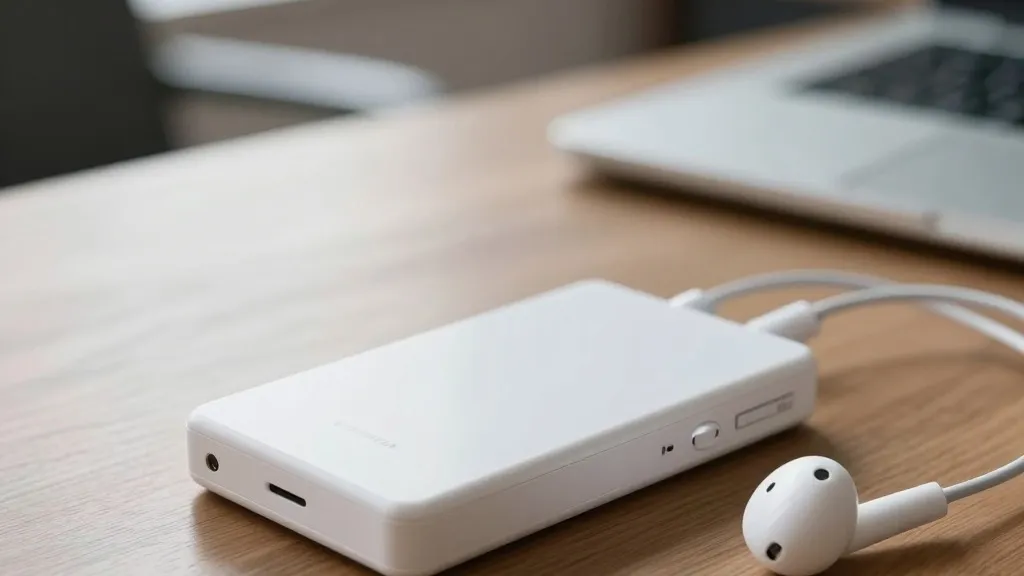
Five gigabytes. That was the total storage capacity of the device that Apple CEO Steve Jobs revealed to the world on October 23, 2001. At the time, 5GB sounded like a modest amount of data, yet it represented a radical departure from the norms of the era. The original iPod was priced at $399 and promised to hold approximately 1,000 songs, a claim that Jobs described as encompassing the entire music library for most consumers. This specific figure—1,000 tracks in a pocket—became the defining marketing hook for a product that would go on to dominate the portable audio market for nearly two decades.
The launch occurred during a pivotal moment for the Cupertino-based company. Apple had recently navigated its way out of a period of stagnation, successfully rebranding its hardware with the introduction of the iMac and the transition to Mac OS X. With the dot-com bubble having recently burst, the tech industry was navigating a volatile economic landscape. Jobs saw an opportunity to position the Mac not just as a computer, but as the central hub for a user’s digital lifestyle, connecting cameras, camcorders, and now, portable music. He argued that while competitors like Sony, Creative, and Sonic Blue had attempted to capture the market, none had yet found the correct formula for digital music consumption.
The hardware itself was a feat of engineering compactness. The device measured 2.4 by 4 by 0.78 inches and weighed just 6.5 ounces, making it lighter than many contemporary cell phones. This diminutive size was made possible by a 1.8-inch hard drive, just 0.2 inches thick, supplied by Toshiba. Jobs emphasized that the device was the size of a standard deck of cards, a comparison that helped consumers visualize the portability. Despite its small footprint, the player offered CD-quality sound and supported the dominant audio formats of the time, including MP3, WAV, and AIFF. The 1,000-song capacity was calculated based on typical pop music files encoded at 160Kbps.
Performance and connectivity were central to the product’s appeal. The iPod featured a rechargeable lithium-polymer battery capable of providing 10 hours of continuous playback. Apple noted that an empty battery could be recharged to 80 percent in just one hour. Crucially, the device was the first and only music player to utilize FireWire 400 for data transfer. Jobs highlighted the speed advantage, claiming that transferring an entire CD of MP3s to the iPod took only five to 10 seconds. In contrast, he estimated that a typical USB-based player of that era would require about five minutes for the same task. To fully load the device with its maximum 1,000 songs, the estimated transfer time was 10 minutes, compared to five hours for a USB competitor.
The user interface was designed for one-handed operation, featuring a scroll wheel with a piezoelectric clicker that provided tactile feedback. This design allowed users to navigate playlists, artists, and songs with precision. During the launch presentation, Jobs demonstrated the device’s capabilities by playing Sarah McLachlan’s “Building a Mystery.” The controls were marketed as intuitive, embodying Apple’s reputation for ease of use. The device also included 20-minute skip protection and fast file transfer capabilities, addressing common frustrations with earlier portable players.
Software integration played a critical role in the iPod’s success. On the same day as the hardware reveal, Apple launched iTunes 2. This version of the software introduced advanced features such as MP3 CD burning and, most importantly, Auto-Sync. This feature ensured that the music libraries users curated on their Mac computers were automatically synchronized with the iPod whenever the device was connected. This seamless integration meant that users did not have to manually manage files on the portable player; the library remained consistent between the desktop and the pocket device. The iPod also functioned as a FireWire hard disk drive, adding utility beyond music playback.
The impact of the original iPod was immediate and profound. It shifted the market from a fragmented landscape of CD players, MP3 CD players, flash players, and hard-disk jukeboxes toward a unified standard. The device’s success paved the way for future iterations and solidified Apple’s position in the consumer electronics market. For over a decade, the iPod line remained a staple of the Apple product stack, coexisting with the iPhone, which launched in early 2007. Although the smartphone eventually absorbed the functions of the dedicated music player, the iPod’s legacy endured until the final model, the 7th-generation iPod Touch, was released in May 2019. The product line was officially discontinued in May 2022, marking the end of an era that began with a simple promise: your entire music library, in your pocket.
Looking back from 2026, the 25th anniversary of the iPod’s debut highlights how quickly technology evolves. What was once a groundbreaking 5GB of storage is now a fraction of the space occupied by a single high-resolution photo. Yet, the original device’s design philosophy—combining hardware compactness with software integration—remains a benchmark in personal electronics. The iPod did not just play music; it changed how people carried, organized, and experienced their audio collections, setting the stage for the mobile devices that define daily life today.
Source: Tom's Hardware