Cape Town's College of Magic Gives Young South Africans Confidence, Creativity and a Place Together
Africa's only school for young stage magicians has brought children of all backgrounds together every Saturday since 1980, and about 80% of its students are sponsored.
By Daily Newz Desk Staff ·
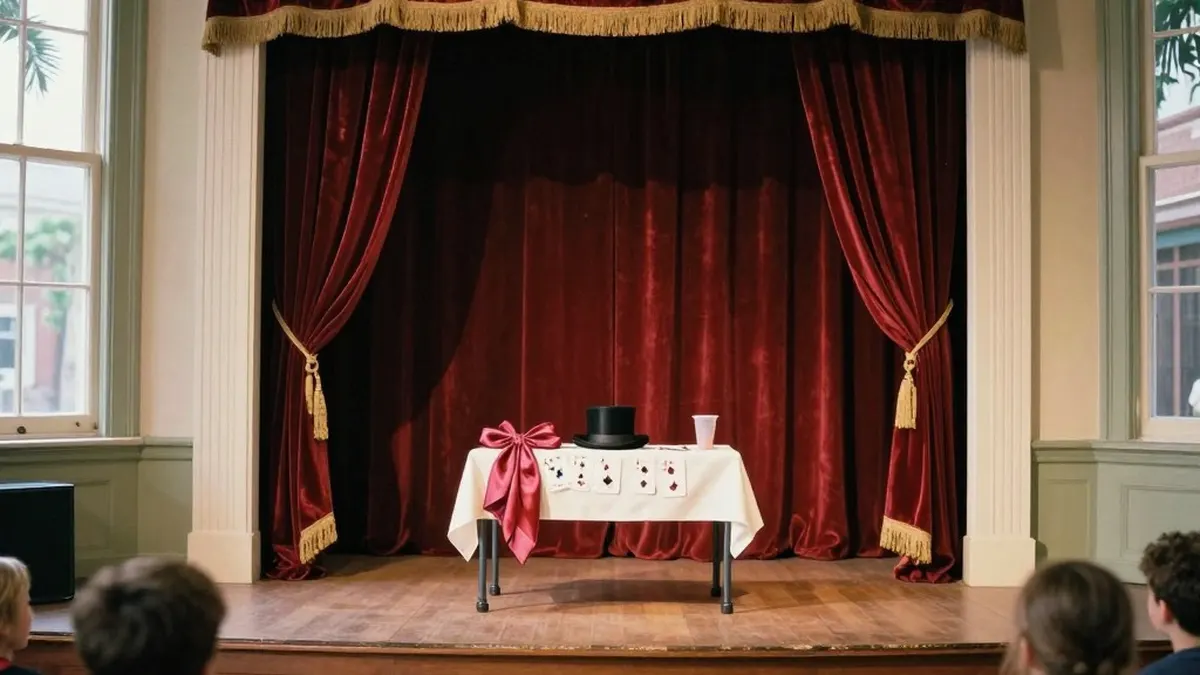
On a cloudy Saturday morning in September, an 11-year-old in a black three-piece suit and yellow bow tie stood alone on a dark stage in Cape Town, waiting for the curtain to rise. Lubelo Mthenjana opened his arms, smiled and announced to a room of about 30 children and parents that he would perform "some magic." He made paper clips vanish into a plastic cup and reappear in a matchbox, then conjured sweets from thin air and tossed them to the crowd. His mother watched with a proud smile as the audience applauded.
The occasion was the annual junior magic contest at the College of Magic, a school housed in an old red-brick Victorian mansion in a quiet suburb. Children in top hats and ties hurried up and down a staircase lined with colorful posters. Display cabinets held wands, silk scarves, handcuffs, dice and dozens of trophies won at competitions around the world. Outside, teenagers rode unicycles around the car park while others practiced juggling on the porch.
The school describes itself as Africa's only one for young stage magicians and illusionists. About 190 students between 10 and 18 attend classes each Saturday morning in puppetry, mime, clowning, juggling, card tricks, illusions, mentalism, stage magic, theater production and escapology. Founder David Gore says the aim is to teach "all the skills that will make a good magician."
Gore started the school in 1980 while studying law and performing at private magic shows. He and a friend visited a local newspaper in top hats and tails and performed for the journalists. An article followed, and 34 young people signed up for weekly classes. South Africa was then under apartheid, yet the college was multiracial from the start. "When we started out, our organization was illegal," Gore says, referring to its policy against segregation.
Almost 50 years on, he says the school still stands out in a city divided by race and wealth. Some students arrive in expensive cars, others after an hour in a shared taxi, but inside they use the same equipment, classrooms, stages and food. The six-year course carries a fee, though roughly 80% of students cannot pay and are sponsored, mostly through private donations.
Research points to wider benefits. Studies have linked learning magic to self-esteem, curiosity, lateral thinking, fine motor skills and problem-solving. A 2021 study by researchers at the Universities of Hertfordshire and Edinburgh found that children who learned and performed a trick improved more in creative fluency and originality than those who did a similar art activity. Gore notes that many graduates do not become performers, but creativity will serve them in any career.
For Lubelo, magic has "opened up a new world." He had to wait until he turned 10 to enroll. At home in Makhaza township, about 40 minutes from the college, he practices on his brothers and parents and performs under the stage name Spade Boy, after his favorite card suit. He has persuaded several friends to join, in a community where magic is often associated with witchcraft. "We just do the kind of magic that makes somebody smile," he says. His mother, Yandiswa, says the lessons have built his confidence and keep him occupied and away from what is happening outside.
That environment is a hard one. South Africa records nearly 60 murders per day, and several Cape Town townships are among the areas worst hit by violent crime. Lubelo often hears gunshots at home. The magic community has felt the toll as well: weeks before the contest, the school held a memorial for Duma Mgqoki, a former student and volunteer teacher who was killed in a shooting in July at age 22. Gore says he hopes the younger generation will drive change.
After the performances, four judges, all former students or teachers, deliberated in private. Back in the small theater, the young magicians held hands as results were read out. "In first place, Lubelo Mthenjana!" He walked up to shake each judge's hand, then ran into his mother's arms. Once home, he planned to start practicing his newest tricks.
Source: NPR